

Författare: Artur Ragulskyi | VD & Grundare
Lästid: ~14 minuter
Om du har undersökt elektrisk offroad-körning har du förmodligen märkt att "elektrisk dirtbike" och "elektrisk offroad-elmotorcykel" används omväxlande i recensioner, återförsäljares webbplatser och forum. De är inte samma sak — och skillnaden är mycket viktig när det gäller var du lagligt kan köra, vilket körkort du behöver, hur elmotorcykeln presterar på olika terränger och vilken plattform som verkligen passar ditt användningsområde.
Detta är särskilt relevant om du är baserad i Tyskland. Tysk väglagstiftning, Landeswaldgesetze (delstatslagar för skog), och L-kategoricertifieringsramverket skapar en specifik juridisk kontext som påverkar varje köpbeslut — och som ofta överraskar förstagångsköpare. Mer om det nedan.
Denna guide bryter ner båda kategorierna tydligt, förklarar de praktiska skillnaderna, täcker hela utbudet av offroad elektriska elmotorcykeltyper utöver dirtbike-underkategorin och förklarar varför vectorebike.com fokuserar medvetet på en specifik del av denna marknad.
Snabbt svar
Elektrisk Dirtbike vs Elektrisk Offroad-elmotorcykel — Kärnfakta:
|
Egenskap |
Elektrisk dirtbike |
Elektrisk offroad-elmotorcykel (bredare) |
|
Primär användning |
Motocross, tekniska stigar, hopp |
Stigar, blandad terräng, skogsvägar, ibland pendling |
|
Väglegal |
Vanligtvis inte |
Ofta tillgänglig i L1e- eller L3e-certifierade versioner |
|
Fjädringsväg |
Hög — designad för hopp och ojämn terräng |
Variabel beroende på underkategori |
|
Ramvikt |
Optimerad för lätthet och smidighet |
Varierar — vissa prioriterar räckvidd eller lastkapacitet |
|
Effektutgång |
6 kW (nybörjare) till 32 kW+ |
Samma räckvidd, men inkluderar fler väglegala konfigurationer |
|
Körkort krävs (Tyskland) |
Ingen på enbart privat mark |
AM/B för L1e; A1, A2 eller B196 för L3e |
|
Typiskt körsammanhang |
Bana, privat mark, avsedda områden |
Stigar + vägtransit, jakt, äventyr, pendling |
Det direkta svaret: Alla elektriska dirtbikes är offroad-elmotorcyklar — men inte alla elektriska offroad-elmotorcyklar är dirtbikes. Dirtbiken är en specifik, prestationsinriktad underkategori. Offroad-elmotorcykeln är ett bredare paraply som inkluderar enduromaskiner, äventyrsturer, trail-elmotorcyklar, jaktplattformar och pendlarvänliga certifierade modeller. Att förstå vilken underkategori du faktiskt behöver är det allra viktigaste köpet.
Vad är en elektrisk offroad-elmotorcykel?
En elektrisk offroad-elmotorcykel är en bred kategori som täcker alla elektriska elmotorcyklar som är designade främst för ojämn terräng — stigar, skogsvägar, grusvägar, jordbruksmark och liknande miljöer. Den avgörande egenskapen är avsedd användning: dessa elmotorcyklar är byggda för att klara förhållanden som en standardväg-elmotorcykel inte kan.
Inom denna kategori är variationen stor. Vissa elektriska offroad Elmotorcyklar har EU-vägcertifiering (L1e eller L3e homologation), vilket innebär att de också kan köras på allmänna vägar och registreras som ett vanligt fordon. Andra är specialbyggda för enbart offroad-användning, utan vägcertifiering.
Viktigt är att "elektrisk offroad Elmotorcykel" inte är en enda produkttyp — det är en familj av olika plattformar byggda kring olika filosofier. Crossmotorcykeln är en medlem i denna familj. De andra är tillräckligt distinkta för att förtjäna egna beskrivningar.
Den fullständiga taxonomin: Typer av elektriska offroad Elmotorcyklar (bortom cross)
De flesta köpguidar behandlar "offroad elektrisk Elmotorcykel" som ett tvåkategoriproblem: crossmotorcyklar och allt annat. Verkligheten är mer användbar än så. Här är huvudunderkategorierna — var och en med en genuint annorlunda designbrief.
1. Elektrisk Crossmotorcykel (Motocrossfokuserad)
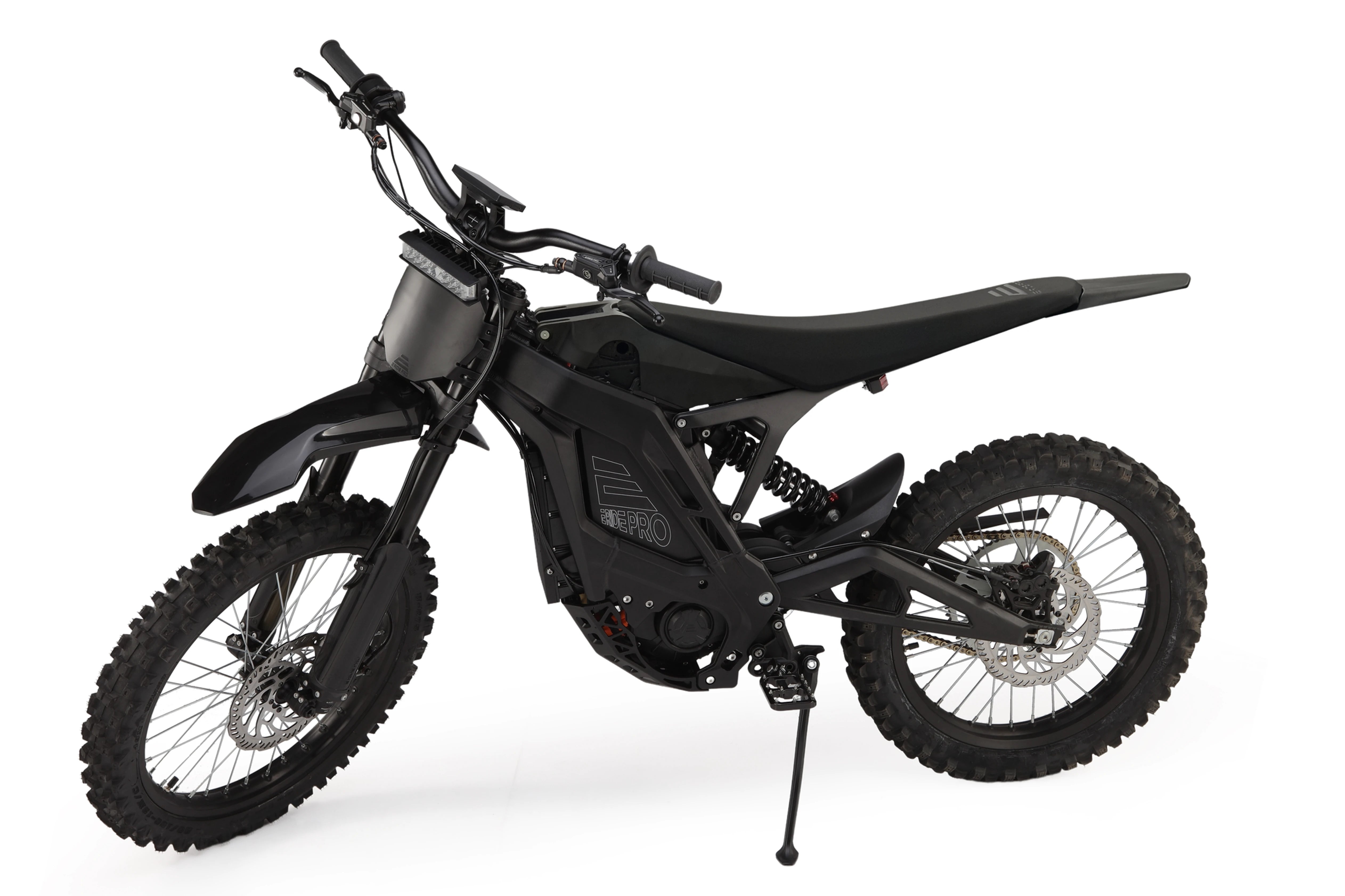
Den arketypiska offroad-elektriska maskinen. Lätt, hög effekt-till-vikt-förhållande, specialbyggd fjädring för hopp och droppar, motocrossgeometri. Exempel: Talaria Sting MX5 Pro, E-Ride Pro SS 3.0.
Vanligtvis inte väglegal. Designad för motocrossbanor, privat mark och tekniska singeltracks. Fokus är maximal trailprestanda, inte regeluppfyllelse.
I Tyskland specifikt: En offroad-endast crossmotorcykel får endast köras på privat mark med uttryckligt tillstånd från markägaren och på terräng helt separerad från allmänna vägar. Tysk federal och delstatlig lag tillåter inte körning av dessa Elmotorcyklar på skogsstigar, fält eller allmänna leder utan tillstånd. Böter för överträdelser varierar avsevärt mellan delstater — bekräftade överträdelser i Tyskland kan vara betydande, och det är värt att klargöra den juridiska statusen för varje terräng innan körning.
2. Elektrisk Enduro Elmotorcykel
Enduro Elmotorcyklar delar DNA med crossmotorcyklar — de är lätta, smidiga och fjädringsfokuserade — men är inställda för längre trailkörning snarare än korta, intensiva banpass. De prioriterar räckvidd, komfort under flera timmars körning och förmågan att täcka varierad terräng inklusive uppförsbackar, nedförsbackar och blandade underlag.
Vissa enduroinriktade elektriska Elmotorcyklar har L3e vägcertifiering, vilket tillåter laglig transit mellan offroad-sektioner. Detta är alltmer relevant för tyska förare, där även tillgång till offroad-områden ofta kräver att man korsar allmänna vägar.
3. Elektrisk Trail Elmotorcykel (Rekreativ Offroad)
En mer avslappnad underkategori än enduro. Trail Elmotorcyklar prioriterar tillgänglighet och nöje framför maximal teknisk prestanda — lägre sadelhöjder, mer förlåtande kraftleverans, mindre aggressiv fjädringsinställning. Dessa är de Elmotorcyklar som de flesta nya offroad-förare bör börja med.
Talaria X3 Pro (XXX) är ett starkt exempel: L1e-certifierad, låg 805 mm sadelhöjd, 55 kg vikt, 5 kW mjuk effekt. Kapabel på stigar, laglig på tyska vägar med AM- eller B-körkort och hanterbar för utvecklande förare.
4. Elektrisk Äventyrs- / Dual-Sport Elmotorcykel
Denna underkategori överbryggar uttryckligen väg- och offroadanvändning. Äventyrselmotorcyklar är tyngre och mer vägorienterade än rena stigmaskiner, med större batterier för räckvidd, mer upprätt ergonomi och vanligtvis L3e-certifiering för motorvägsanvändning. Tänk på den elektriska motsvarigheten till en bensindriven BMW GS eller KTM 790 Adventure.
På EU:s e-motorcykelmarknad representerar Altis Sigma 22.5 kW och Talaria Komodo 32 kW den övre delen av detta segment — full vägcertifiering, seriös offroadkapacitet, större batterier.
5. Elektrisk Jakt / Nyttomaskin
En praktiskt inriktad underkategori optimerad för lastbärande, tystnad och uthållig drift snarare än prestanda. Jägare och markägare behöver en maskin som låter minimalt, bär utrustning pålitligt och kan täcka flera tiotals kilometer på blandad terräng utan problem.
Viktiga krav: låg ljudnivå, tillräcklig lastkapacitet (lastsystem, sidoväskor), räckvidd på minst 50–80 km under verkliga offroadförhållanden och en stabil ramgeometri. Vector Tide 10 kW — med flygplansklassad aluminiumram, centraliserad motorplacering för lastbalans och ett batteri med stor kapacitet — är byggd specifikt för detta användningsområde.
Tyskt jakt-sammanhang: I de flesta tyska delstater regleras tillgång till skogsmark för jakt och skogsbruk separat från allmän rekreationslagstiftning. Jägare verkar vanligtvis under en Sondergenehmigung (särskilt tillstånd) eller på mark där de har jakt rättigheter, vilket kan tillåta motoriserad tillgång som annars är förbjuden för allmänheten. Elektriska elmotorcyklar är särskilt väl lämpade här: nästan tyst drift vid låga till medelhöga hastigheter stör varken vilda djur eller grannar på ett sätt som ingen bensinalternativ kan matcha.
6. Elektrisk Pit Bike (Ungdom / Nybörjare / Paddock)
Mindre hjul, lägre effekt maskiner designade för att lära teknik eller för paddockanvändning. Inte avsedda för fullstor stigkörning. E-Ride Pro Mini passar här — 680 mm sadelhöjd, cirka 48 kg, 6 kW, äkta hydrauliska komponenter. En riktig lärplattform, inte en leksak, men tydligt inte en fullstor stigmaskin heller.
Underkategori Jämförelse i korthet
|
Underkategori |
Primär användning |
Gatulegal? |
Effektfokus |
Viktprioritet |
|
Dirt Bike / Motocross |
Stig, teknisk singletrack |
Vanligtvis nej |
Hög topp-effekt |
Mycket lätt |
|
Enduro |
Långa spårsessioner, blandad terräng |
Ibland (L3e) |
Räckvidd + effekt |
Lätt |
|
Spår / Rekreation |
Avslappnad spårkörning |
Ofta (L1e) |
Hantera effekten |
Lätt till medium |
|
Äventyr / Dual-Sport |
Väg + offroad kombinerat |
Ja (L3e) |
Räckvidd + mångsidighet |
Medium |
|
Jakt / Arbete |
Lastbärande, tyst närmande |
Ibland |
Lågt vridmoment vid låg hastighet |
Stabil |
|
Pit Bike / Ungdom |
Lärande, paddock |
Nej |
Låg, förlåtande |
Mycket lätt |
Vad är en elektrisk dirtbike? (Underkategorin i detalj)
En elektrisk dirtbike är en prestandafokuserad underkategori av offroad elektriska maskiner. Designfilosofin lånar direkt från traditionella bensindrivna motocross-elmotorcyklar: ett högt effekt-vikt-förhållande, specialbyggd fjädringsväg för hopp och fall, knoppiga däck och geometri som prioriterar manövrerbarhet över stabilitet i hög hastighet.
Elektriska dirtbikes har vanligtvis ingen vägcertifiering. De är designade för privat mark, motocrossbanor, offroad-parker och utpekade spårsystem — inte allmänna vägar. Detta är en viktig skillnad för nya köpare att förstå innan köp.
E-Ride Pro Mini illustrerar nybörjarsidan av denna kategori: kompakt, lätt, smidig hantering för trång terräng, äkta dirtbike-prestanda i ett hanterbart paket. Vector Vortex 10 kW representerar andra änden — anpassad stålramskonstruktion för extrem belastning och hopplandningar, mittmonterad motor för viktfördelning, programmerbara effektlägen, oförstörbar byggfilosofi.
Varför vectorebike.com specialiserar sig exklusivt på elektriska dirtbikes
Detta är en fråga värd att besvara direkt, eftersom den formar produktbesluten som denna återförsäljare fattar och den kund den tjänar väl.
Vectorebike.com är en auktoriserad EU-återförsäljare för Talaria, E-Ride Pro och Altis — och tillverkar sin egen anpassade Vector-serie i Tyskland. Varje modell i sortimentet är vad branschen kallar en prestanda e-moto: en maskin där den primära designprioriteten är terrängkapacitet, effekt-vikt-förhållande och spårprestanda.
Det medvetna valet att hålla sig inom detta segment — istället för att expandera till bredare äventyrs- eller arbetskategorier — speglar tre strategiska beslut:
Först: djup före bredd. vectorebike.com-teamet har över 11 års praktisk erfarenhet av dessa specifika plattformar. Personalen är förare och ingenjörer som förstår Talaria-växellådan, E-Ride Pro-fjädringsgeometrin och Vector-anpassade drivlinan på en nivå som vanliga motorsportåterförsäljare inte kan matcha. Att expandera till touring-elmotorcyklar eller arbets-ATV:er skulle späda ut den expertisen utan att verkligen tjäna någon av kunderna.
Andra: certifieringsflexibiliteten hos moderna dirt bikes ändrar kalkylen. Den historiska anledningen att skilja "dirt bikes" från "vägkapabla off-road-elmotorcyklar" var att dirt bikes inte kunde köras till stigen. Det är inte längre korrekt. E-Ride Pro SS 3.0, E-Ride Pro SR, Talaria X3 Pro och Talaria Komodo finns alla tillgängliga i L1e- eller L3e-konfigurationer — lagligt körbara på tyska allmänna vägar. Samma elmotorcykel som river upp singletrack på lördagsmorgonen kan lagligt pendla till jobbet på måndagen.
Tredje: kundanpassning. Föraren som vill ha en äventyrstur för långdistansvägkörning med tillfällig off-road-kapacitet är en annan kund än den som vill köra snabbt på stigar, bygga motocross-färdigheter eller utforska skogsterräng. Vectorebike.com riktar sig till den senare — personer som vill ha äkta off-road-prestanda som huvudkriterium, med väg-godkännande som en bonusfunktion snarare än ett kärnkrav.
Det praktiska resultatet: när du köper från vectorebike.com är hela sortimentet — från €3 790 Talaria X3 Pro till €6 990+ E-Ride Pro SR — designat för terrängprestanda först. Väg-godkännande, där det finns, är ett tillägg till den grunden, inte en ersättning för den.
Väg-godkända elektriska off-road-elmotorcyklar i Tyskland: Vad lagen faktiskt kräver
Denna sektion är särskilt viktig för tyska köpare, eftersom tysk vägtrafiklag lägger till flera praktiska lager ovanpå EU:s L-kategoriramverk som är värda att förstå innan du köper.
Det tyska körkortsramverket för L1e-modeller
L1e-modeller — begränsade till 45 km/h på allmänna vägar — är den mest tillgängliga kategorin för tyska förare. Enligt tysk lag (Fahrerlaubnisverordnung, FeV):
- Från 15 år: Förare får köra L1e-fordon med ett Führerscheinklasse AM (det tyska mopedkörkortet). Detta är den vanligaste ingångspunkten för yngre förare.
- Från 18 år: Ett standard Klasse B-körkort (det vanliga bilkörkortet) täcker L1e-körning. Inget extra motorcykelkörkort krävs. Detta är den mest praktiska vägen för vuxna köpare — om du kan köra bil i Tyskland kan du lagligt köra en L1e-modell som E-Ride Pro SS 2.0 L1e eller Talaria X3 Pro L1e på allmänna vägar direkt.
Det tyska körkortsramverket för L3e-modeller
L3e-modeller — fullständig motorcykelklassificering, utan laglig hastighetsbegränsning — kräver motorcykelkörkort enligt tysk lag:
- Körkortsklass A1: Från 16 års ålder. Täcker lätta motorcyklar upp till 11 kW. Tillräckligt för många L3e-modeller i deras lagliga vägkonfiguration.
- Körkortsklass A2 eller A: För kraftfullare L3e-modeller.
- B196-förlängning: En praktisk genväg för innehavare av fullständigt klass B (bil) körkort som är minst 25 år gamla och har haft sitt B-körkort i minst 5 år. B196-förlängningen tillåter förare med klass B-körkort att köra motorcyklar upp till 11 kW efter att ha genomgått extra utbildning. Den ger inte A2-ekvivalenta rättigheter och gäller endast inom Tyskland. Detta är en av de vanligaste vägarna för tyska vuxna som vill köra en L3e-modell utan att ta ett fullständigt motorcykelkörkort från början.
Vectorebike.com har en dedikerad guide som förklarar exakt vilket körkort som gäller för vilken modell i Tyskland: Körkort för elmotorcyklar i Tyskland.
Registrering och försäkring i Tyskland: L1e vs L3e
En av de praktiska fördelarna med L1e-modeller i Tyskland är den förenklade registreringsprocessen:
L1e (Kleinkraftrad): Kräver inte formell registrering hos Zulassungsstelle. Istället får du ett Versicherungskennzeichen — en liten försäkringsskylt som utfärdas direkt av ditt försäkringsbolag. Försäkringsåret löper från 1 mars till sista februari året därpå. Färgen på Versicherungskennzeichen ändras årligen (nuvarande färg för 2025/2026 är grön; från 1 mars 2026 byts den till svart). Haftpflicht (ansvarsförsäkring) börjar från cirka 45–65 € per år. Ingen TÜV-inspektion krävs. Ingen vägskatt (Kfz-Steuer) gäller. Detta är bland de mest lättskötta lagramarna för motorfordon i Tyskland.
L3e (Kraftrad): Kräver formell registrering hos Zulassungsstelle med en standardregistreringsskylt (amtliches Kennzeichen). Full Kfz-Haftpflichtversicherung är obligatorisk. Periodisk TÜV-inspektion gäller. Vägskatt (Kfz-Steuer) tas ut, men till måttliga nivåer för elfordon. Högre försäkringskostnader än L1e — men fortfarande vanligtvis lägre än att försäkra en jämförbar bensinmotorcykel.
Viktig varning för tyska köpare: L1e- och L3e-versionerna av de flesta E-Ride Pro och Talaria-modeller är tekniskt identiska hårdvarumässigt — samma motor, samma batteri, samma ram. Skillnaden är intyget om överensstämmelse (CoC) och en mjukvarubaserad hastighetsbegränsare. Att ta bort 45 km/h-begränsaren på en L1e-elmotorcykel utan att uppdatera registrering och försäkring är ett allvarligt lagbrott i Tyskland. Det ogiltigförklarar din försäkring, och eftersom elmotorcykeln förblir registrerad som en L1e med en annan teknisk verklighet, kör föraren i praktiken ett oregistrerat, oförsäkrat fordon — ett brott enligt Pflichtversicherungsgesetz som medför straffrättsligt ansvar inklusive böter och potentiella körkorts konsekvenser.
Var kan du faktiskt köra offroad i Tyskland?
Detta är möjligen den mest praktiskt viktiga frågan för tyska offroad-förare — och svaret är mer restriktivt än vad många förstagångsköpare förväntar sig.
Tysklands Bundeswaldgesetz (federala skogslagen) och de individuella Landeswaldgesetze i varje delstat skapar ett generellt förbud mot motorfordon på skogsstigar och -leder. De specifika reglerna varierar mellan delstaterna:
- Bayern (§ 17 Bayerisches Waldgesetz): Körning i skogar är förbjuden som huvudregel. Undantag gäller för jägare, skogvaktare och innehavare av särskilda tillstånd.
- Baden-Württemberg (§ 37 LWaldG BW): Tillåtet endast med tillstånd.
- Nordrhein-Westfalen (§ 2 Abs. 2 Landesforstgesetz NRW): Allmänt förbud.
- Niedersachsen: Körning tillåten endast med uttryckligt tillstånd; dock kan vissa jordbruksstigar utanför skogar vara tillåtna där de inte uttryckligen är avstängda.
- Hessen, Thüringen, Sachsen, Brandenburg: Liknande regler — körning endast med särskilt tillstånd.
Den praktiska sammanfattningen: att köra en offroad-elmotorcykel — elektrisk eller bensindriven — i tyska skogar utan uttryckligt tillstånd är olagligt oavsett om elmotorcykeln är väglegal. Väglegalitet och offroad-tillgång är helt separata rättsliga frågor i Tyskland. En L1e-certifierad elmotorcykel med giltig registrering får inte köras på skogsstigar bara för att den har en Versicherungskennzeichen.
Var laglig offroad-körning är tillåten i Tyskland:
- Specifika motocross- och offroadbanor: Privata anläggningar som drivs för detta ändamål. Dessa är de främsta lagliga platserna för dirtbike-körning i Tyskland.
- Offroad-parker: Vissa särskilda offroad-parker finns, även om tillgänglighet och tillåtna fordonstyper varierar.
- Privat mark med ägarens tillstånd: Körning på privat mark med uttryckligt samtycke från markägaren, där terrängen är helt avskild från allmänna vägar och trafik.
- Tidigare militärt eller industriellt område: Vissa före detta militära platser och tidigare industriområden används informellt och ibland med myndigheternas tolerans — men detta innebär rättslig osäkerhet och är inte ett pålitligt alternativ.
För tyska förare som vill ha ett utbud av tillgängliga alternativ är kombinationen av en certifierad L1e- eller L3e-modell för vägtransport och en dedikerad offroad-bana för prestandakörning det mest juridiskt säkra tillvägagångssättet. Det är just detta användningsfall som gör E-Ride Pro SS 3.0 L1e/L3e till en så praktisk plattform: väglegal för daglig användning, tillräckligt hög prestanda för att vara verkligt engagerande på en dedikerad bana eller privat anläggning.
Elektrisk dirtbike vs elektrisk offroad-elmotorcykel: den huvudsakliga skillnaden i praktiken
Den tydligaste sammanfattningen: varje elektrisk dirtbike är en offroad-elmotorcykel, men inte tvärtom. En jakt-nyttomotorcykel, en långdistansäventyrsturer och en motocrossmaskin är alla "offroad-elmotorcyklar" — men de är byggda kring fundamentalt olika prioriteringar.
När de två termerna används i kontrast är den underförstådda skillnaden vanligtvis mellan en prestandafokuserad, ofta icke-väglegal dirtbike och en mer mångsidig, ofta certifierad offroad-maskin som kan användas för flera ändamål. Tabellen nedan fångar denna praktiska jämförelse:
|
Dimension |
Elektrisk dirtbike |
Mångsidig elektrisk offroad-elmotorcykel |
|
Designprioritet |
Maximal ledprestanda |
Balanserad prestanda + användbarhet |
|
Vägkörning i Tyskland |
Ej tillåtet; endast privat mark |
L1e: upp till 45 km/h med AM- eller B-körkort |
|
Registrering i Tyskland |
Ej krävd (ingen vägkörning) |
L1e: Versicherungskennzeichen (från ~45 €/år) |
|
Körkortskrav (Tyskland) |
Ingen |
AM eller B för L1e; A1, A2, B196 för L3e |
|
Skogs-/ledåtkomst (Tyskland) |
Underkastad Landeswaldgesetz |
Samma — separat från väglegalitet |
|
Vikt |
Optimerad lätt |
Måttlig — kan bära större batteri |
|
Bäst för |
Bana, privat mark, offroad-parker |
Leder + vägtransport, pendling, flexibel användning |
Vilken är bäst för offroad-leder?
För ren offroad-prestanda på leder beror svaret på vilken typ av leder du kör.
Tekniska singletrack, motocrosslinjer, hoppsektioner: en dedikerad elektrisk dirtbike har en mätbar fördel. Lättare ram, högre fjädringsväg och geometri anpassad för manövrerbarhet. E-Ride Pro Mini är särskilt stark här för förare som bygger teknik — mindre hjul och lägre vikt gör den verkligen lättare att kontrollera på trånga tekniska terränger än tyngre alternativ.
Blandade leder — grusvägar, skogsstigar, längre enduro-liknande rutter: en mångsidig offroad-elmotorcykel presterar ofta bättre totalt sett. E-Ride Pro SS 3.0 18 kW erbjuder kraftfull effekt, fullt justerbar FastAce-fjädring och flexibiliteten att köra lagligt på tyska vägar till spårområdet — en verklig praktisk fördel jämfört med en elmotorcykel som kräver transport på släp varje gång.
Långdistansspårsessioner: batterikapacitet blir en avgörande faktor. E-Ride Pro SR 25 kW med sitt 72V 50Ah Samsung-batteri (3 600 Wh) levererar konsekvent prestanda under längre sessioner på ett sätt som mindre dirtbikes helt enkelt inte kan upprätthålla.
Elektrisk offroad-elmotorcykel för jakt i Tyskland: När det är mer meningsfullt
Jakt är ett av de tydligaste användningsområdena där en elektrisk offroad-elmotorcykel vinner avgjort — och den tyska jaktkontexten gör detta särskilt relevant.
Tystnad är den främsta fördelen. En elektrisk motor producerar nästan inget ljud vid låg till medelhög hastighet. För tyska jägare som verkar i skogsmiljöer där störning av djur är både en praktisk och juridisk fråga, är detta en grundläggande skillnad. Enligt tysk jaktlag (Bundesjagdgesetz) förväntas jägare minimera störningar för vilda djur och angränsande områden. En nästan tyst elektrisk motor stämmer överens med denna skyldighet på ett sätt som en bensinmotor inte kan.
Åtkomsträttigheter för jägare skiljer sig från allmänhetens tillgång. Tyska jägare har vanligtvis specifika åtkomsträttigheter (Jagdrecht) över de områden de förvaltar, vilket kan tillåta motoriserad åtkomst som är förbjuden för allmänheten enligt Landeswaldgesetze. Detta innebär att en elektrisk offroad-elmotorcykel som används för jakt inte omfattas av samma generella förbud mot skogsstigar som gäller för fritidsåkare — men den måste fortfarande användas inom villkoren för de relevanta jaktlagarna och överenskommelser med markägare.
Räckvidd och lastkapacitet spelar roll. Vector Tide 10 kW, med sin flygplansklassade aluminiumram, centraliserade viktfördelning och stora batteri, är det starkaste valet i vectorebike.com-sortimentet för jakt och nytta. Talaria Sting MX5 Pro 13 kW är ett kapabelt alternativ med beprövad spårpålitlighet och mjukt vridmoment i låg till medelhastighet.
Vilken typ passar vilken förare?
|
Förareprofil |
Bästa matchning |
Varför |
|
Ny inom offroad, bygger teknik |
Lägre sadel, lättare vikt, förlåtande kraft |
|
|
Mellanliggande, regelbunden terrängkörning (Tyskland) |
Prestanda + L1e/L3e vägåtkomst |
|
|
Vuxen med klass B-körkort som vill ha L1e |
Omedelbar väglegalitet, inget extra körkort behövs |
|
|
Pendling + stig på en elmotorcykel (Tyskland) |
Samma elmotorcykel, full gatucertifiering |
|
|
Erfaren, prestandajakt |
25 kW, Samsung 50S, FastAce-fjädring |
|
|
Jakt, nytta, tyst drift (Tyskland) |
Aluminiumram, stabil balans, lång räckvidd |
|
|
Tuff off-road, maximal hållbarhet |
Stålram, mittmotor, programmerbara lägen |
|
|
Högspänningsprestanda |
98V hairpin-motor, jämn och uthållig effekt |
Expertutlåtande: Välj efter användningsfall, inte efter etikett
Jämförelsen "elektrisk dirtbike vs elektrisk off-road-elmotorcykel" är en användbar utgångspunkt, men bör inte vara slutpunkten för ditt beslut. Etiketten är mindre viktig än det specifika användningsfallet — och i Tyskland den juridiska kontext som omger det användningsfallet.
Om du vill ha maximal off-road smidighet på en dedikerad bana eller privat mark och inte behöver vägaccess, är en specialbyggd elektrisk dirtbike rätt val. Vector Vortex och E-Ride Pro Mini representerar denna filosofi tydligt.
Om du vill ha en enda maskin som du kan köra från ditt tyska hem till en bana eller anläggning lagligt, prestera över varierad terräng och eventuellt använda för pendling, är en certifierad off-road elmotorcykel rätt val. I Tyskland, där skogstillträde är strikt reglerat och lagliga körområden kräver antingen certifiering eller privat mark, är denna kombination av L1e/L3e-laglighet plus off-road-kapacitet mer praktiskt relevant än nästan någon annanstans i Europa.
E-Ride Pro SS 3.0 och E-Ride Pro SR — båda tillgängliga i L1e- och L3e-konfigurationer — är de mest mångsidiga alternativen i den nuvarande vectorebike.com-serien för just detta tyska användningsfall. Du kan köra till banan på måndag med giltigt Versicherungskennzeichen och pressa samma elmotorcykel till gränsen på privat mark eller en dedikerad anläggning under helgen.
Observera: Tysk lagstiftning gällande fordonscertifiering, licensiering och skogstillträde kan ändras och varierar mellan delstater. Denna artikel ger en praktisk översikt baserad på gällande regler i början av 2026, men köpare bör verifiera specifika krav med relevant Zulassungsstelle, sitt försäkringsbolag och — för frågor om skogstillträde — lämplig statlig skogsvårdsmyndighet eller juridisk rådgivare.
FAQ
What is the difference between an electric dirt bike and an electric off-road bike?
An electric dirt bike is a performance-focused subcategory optimised for motocross-style terrain — jumps, technical singletrack, steep climbs — and is typically not road-legal. An electric off-road bike is a broader umbrella category that includes dirt bikes, enduro machines, trail bikes, adventure tourers, hunting platforms, and utility bikes. Many off-road bikes in the EU market carry L1e or L3e certification for legal street use.
What types of electric off-road bikes exist beyond dirt bikes?
The main subcategories are: electric enduro bikes (tuned for longer trail sessions), electric trail bikes (accessible recreational riding), electric adventure/dual-sport bikes (road + off-road combined), electric hunting/utility bikes (load carrying, minimal noise), and electric pit bikes (youth/beginner platforms). Each has a different design brief and suits different rider needs.
Do I need a licence for an electric dirt bike in Germany?
For off-road-only models on private land: no licence is required. For road-legal L1e models: an AM licence (Führerscheinklasse AM) from age 15, or a standard B driving licence from age 18 — no additional motorcycle licence needed. For L3e models: an A1, A2, or A motorcycle licence, or a B196 extension for eligible Class B holders aged 25+. Full details at vectorebike.com's German licence guide.
Can I ride an electric off-road bike in German forests?
Generally no — not without authorisation. Germany's Bundeswaldgesetz and state-level Landeswaldgesetze prohibit motorised vehicles on forest paths as a rule. This applies regardless of whether the bike has road certification. Legal riding is permitted on dedicated motocross and off-road tracks, private land with owner consent (terrain fully separated from public roads), and in some former industrial or military areas. Hunters may have separate access rights under the Bundesjagdgesetz.
Why does vectorebike.com only sell electric dirt bikes and not broader adventure or touring bikes?
Vectorebike.com focuses on performance e-motos — machines where off-road capability is the primary design criterion. The team's expertise, service infrastructure, and component knowledge are built around these specific platforms. Many models in the range (E-Ride Pro SS 3.0, E-Ride Pro SR, Talaria Komodo, Talaria X3 Pro) carry full L1e or L3e road certification — so they are fully legal on German roads in their certified configurations.
Can an electric off-road bike be road-legal in Germany?
Yes. L1e certified models require only a Versicherungskennzeichen (from approximately €45–65/year for Haftpflicht), no TÜV, and no road tax. L3e models require full registration at the Zulassungsstelle, a motorcycle licence (or B196 extension), periodic TÜV, and road tax. Examples at vectorebike.com include the E-Ride Pro SS 2.0 L1e, E-Ride Pro SS 3.0 L1e/L3e, E-Ride Pro SR L1e/L3e, and Talaria X3 Pro L1e.
What is the best electric off-road bike for hunting in Germany?
The ideal hunting e-moto in a German context combines near-silent operation, at least 50–80 km of real-world off-road range, a stable frame rated for load carrying, and tyres suited to mixed terrain. The Vector Tide 10 kW is the strongest fit in the vectorebike.com range for this use case, given its aviation-grade aluminium frame and centralised weight distribution. The Talaria MX5 Pro is a capable alternative.