

Author: Artur Ragulskyi | CEO & Founder
Reading time: ~10 minutes
Tires are one of the most consequential decisions you can make for an electric off-road bike — and one of the most commonly underestimated. The right tire can dramatically improve grip, control, and range. The wrong one makes every ride harder than it needs to be.
This guide covers everything you need to make a well-informed tire decision: sizing and pressure basics, terrain-specific recommendations, a comparison of pneumatic and solid options, fat versus regular tires, and a practical checklist for buyers. Examples throughout are drawn from models in the current Vectorebike lineup, since tire compatibility depends heavily on the specific wheel dimensions your bike ships with.
Understand E-Bike Tire Basics: Size, Width, and Pressure
Before choosing a tire, you need to understand what the numbers on the sidewall actually mean. E-bike tire labelling follows the same conventions as standard motorcycle and MX tyres, but the values vary significantly across performance classes.
Tire size notation
Most tires on performance e-bikes use either metric or imperial notation:
-
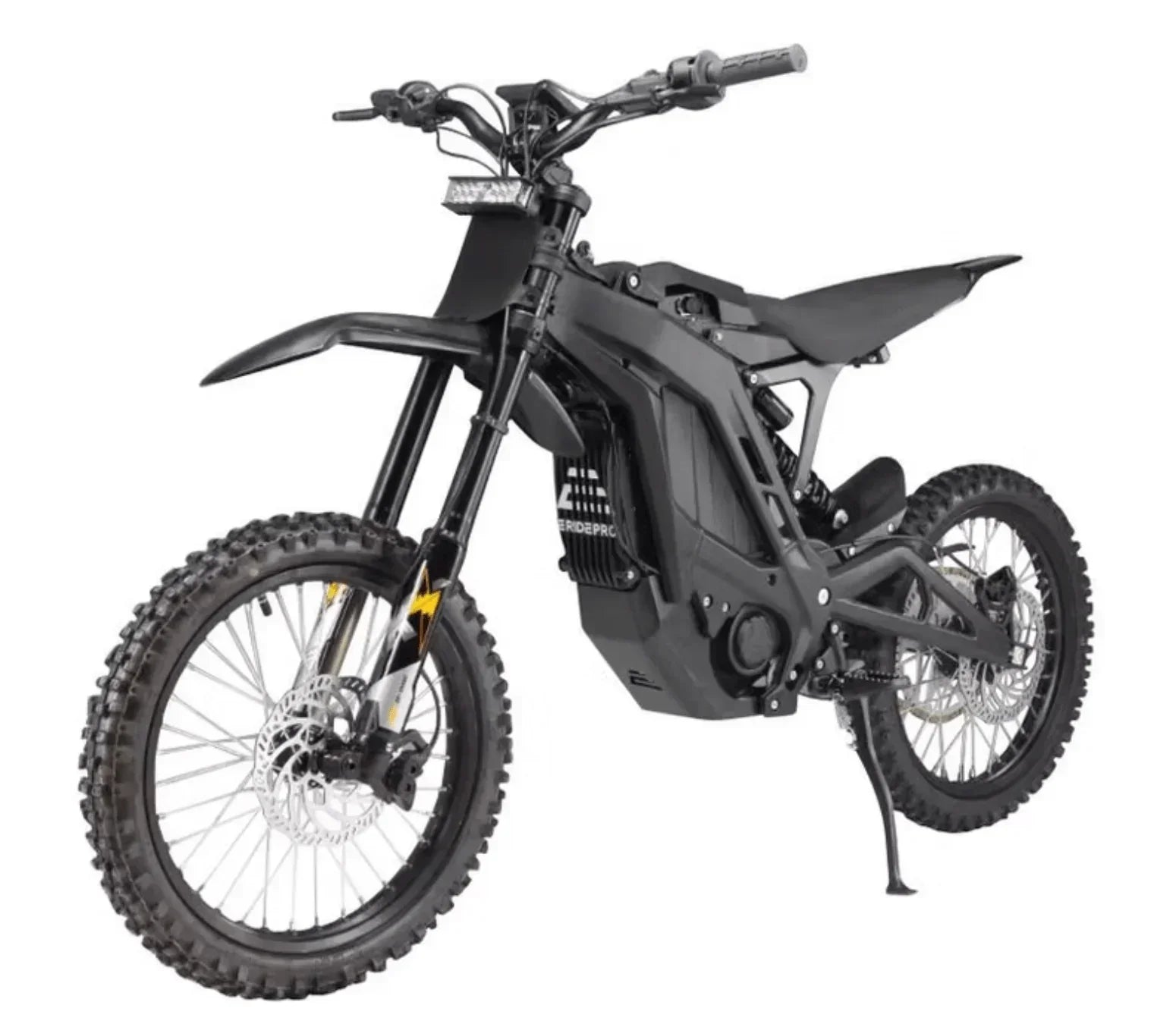
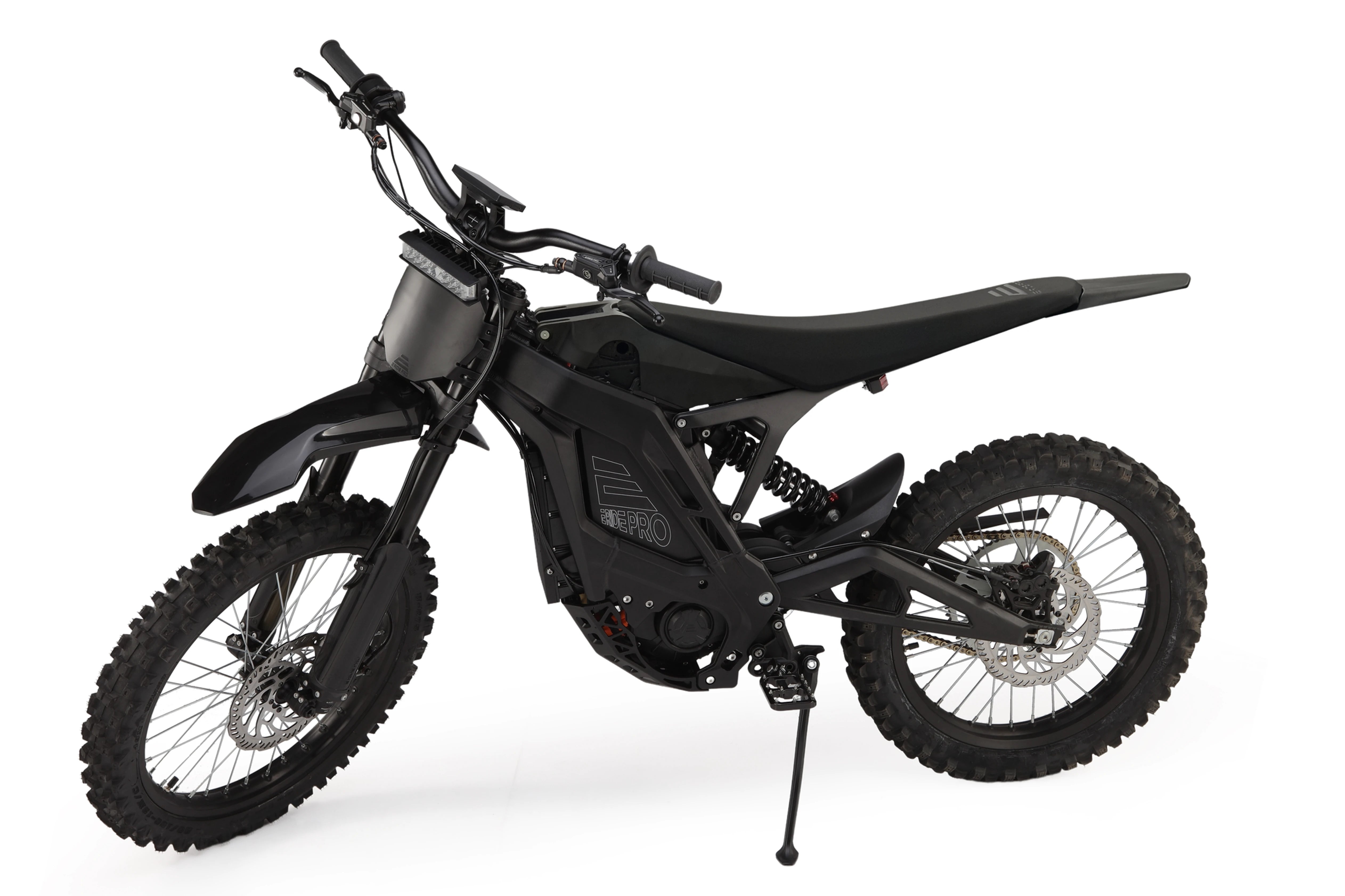
Metric format (e.g. 80/100-19): first number is section width in millimetres, second is the aspect ratio (sidewall height as a percentage of width), third is wheel diameter in inches. The E Ride Pro SR ships with an 80/100-19 front and 100/90-18 rear — proper motocross-spec dimensions.
-
Imperial/fractional format (e.g. 2.75-19, 3.00-18): section width in inches followed by wheel diameter. The E Ride Pro SS 3.0 uses a 2.75-19 front / 3.00-18 rear — slightly narrower for a balance of road and trail use.
- The E Ride Pro SE uses 70/100-19 front / 80/100-19 rear as standard, with an optional 3.0-18 "Fatty" rear for riders who want a larger contact patch at lower pressures.
Wheel diameter across the lineup
|
Model |
Front wheel |
Rear wheel |
|
E Ride Pro SR |
19" |
18" |
|
E Ride Pro SS 3.0 |
19" |
18" |
|
E Ride Pro SE |
19" |
19" (opt. 18") |
|
E Ride Pro SS 2.0 |
19" |
19" |
|
E Ride Pro Mini |
16" |
14" |
|
Vector Vortex |
19" |
17" |
|
Talaria X3 Pro (XXX) |
12" |
12" |
Replacing a tyre with the wrong diameter changes the effective gearing, seat height, ground clearance, and speedometer accuracy. Always verify the correct diameter before purchasing a replacement.
Tyre pressure: why it matters more on e-bikes
Electric off-road bikes can be heavier than comparable petrol bikes due to battery weight, though lighter models in the e-moto class may weigh less than traditional combustion motorcycles. The E Ride Pro SR weighs 83 kg; the Vector Vortex is heavier still. That additional weight increases tyre loading and makes correct pressure more critical.
General pressure guidelines for performance e-motos:
-
Hard-pack trails / road use: 1.4–1.8 bar (20–26 psi) front, 1.6–2.0 bar (23–29 psi) rear
-
Loose / soft terrain: 0.9–1.2 bar (13–17 psi) — lower pressure expands the contact patch and significantly improves traction
- Dual-sport / commuting: 1.5–1.8 bar (22–26 psi) for stable handling and lower rolling resistance
Under-inflated tyres on a heavy e-moto increase rolling resistance, which directly reduces range. Even modest under-inflation measurably increases the energy required to maintain a given speed — on a platform where battery capacity is finite, that matters.
How to Choose the Right Tires for Your E-Bike by Riding Style
The most important single question when choosing tyres is: what does your actual riding look like?
Not what you aspire to ride — what you actually do. Once you have an honest picture of your terrain mix, selection becomes straightforward.
Classify your riding:
-
Primarily asphalt / commuting: you need low rolling resistance, predictable wet-weather grip, and durability over distance. Aggressive knobs are actively counterproductive here.
-
Mixed use (roughly 70% road, 30% trail): a dual-sport tyre is the correct tool. It trades the last 20% of grip in each environment for competence in both
. -
Primarily trails / off-road: tread pattern and compound become far more important than rolling resistance. The question becomes: what kind of terrain?
- Technical off-road / motocross-style: prioritise maximum knob depth, carcass stiffness for lateral cornering loads, and compound softness for grip on variable surfaces.
Best E-Bike Tires for Commuting
For road and commuting use, tyre requirements differ substantially from off-road riding. Running off-road tyres on asphalt is one of the most common and avoidable mistakes on the electric moto market.
What to look for in a commuting tyre:
-
Low rolling resistance: more central contact area and less void ratio moves more efficiently on paved surfaces, extending range
-
Wet-road grip: siping (fine lateral cuts in the tread) and compounds rated for lower temperatures and wet conditions
-
Durability: road riding creates consistent, even wear — prioritise treadwear ratings over maximum grip
- Noise: deep knobby tyres hum loudly on asphalt, which is fatiguing over any real distance
Practical setup for Vectorebike's road-legal models:
For the E Ride Pro SS 2.0 and E Ride Pro SE — both L1e street-legal bikes — the stock 19" wheel configuration accommodates dual-sport compound tyres well. The SE's optional 3.0-18 Fatty rear adds road confidence through a larger contact patch without going full fat-tyre format.
For the E Ride Pro SS 3.0, the 2.75-19 / 3.00-18 stock sizing supports a wide range of dual-sport options. A mixed-use compound rather than a pure off-road tyre gives the best real-world balance for riders who commute weekdays and trail ride on weekends.
One important note: before fitting a wider commuting tyre to a motocross-spec rear wheel, verify chain clearance within the stock rear swingarm. Significantly wider tyres may require spoke adjustment or rim change to fit cleanly.
Best E-Bike Tires for Off-Road
"Off-road" is not a single condition — it covers terrain types with genuinely different tyre requirements.
Hard-pack and dry trails
Compact, dry terrain needs sufficient edge grip for cornering but moderate void ratio. Too much void on hard pack means knobs compress without digging in. Intermediate MX-style compounds work well here; full mud tyres do not.
Loose and soft terrain
Deep, widely spaced knobs that shed material as they rotate maintain contact with the terrain beneath the loose surface layer. Tyre pressure should drop significantly — 0.9–1.0 bar (13–14 psi) is appropriate for soft conditions and dramatically improves traction compared to the same tyre run at road pressure.
Rocky terrain
Carcass construction becomes critical. Sharp rocks puncture thin-sidewall tyres easily. Higher ply ratings resist punctures and allow lower pressures without risking pinch flats — a meaningful advantage in remote areas where a puncture is a serious inconvenience.
Model-specific off-road notes:
The E Ride Pro SR's 80/100-19 front and 100/90-18 rear are genuine MX-spec sizes, giving access to the full range of motocross rubber. The 18" rear rim can accept wider tyres with minor spoke adjustment, opening up more aggressive options for extreme terrain.
The Vector Vortex uses 19" front and 17" rear — motorcycle-spec sizing with a rear swingarm designed to accommodate wide, aggressive off-road tyres. This is specifically why the Vortex handles mud, sand, and snow as well as it does.
The Vector Tide, with its centralised motor and battery mass, is unusually stable under heavy off-road loads on loose terrain — tyre selection should complement that stability with appropriate void ratio for the conditions.
For the Talaria Sting MX5 Pro, tyre selection should account for the bike's lighter weight. Full-size motocross tyres designed for 130 kg petrol bikes add unnecessary rotational mass that blunts the Talaria's natural agility.
Pneumatic vs Solid Tires for E-Bike
This question comes up regularly, especially from riders who have experienced punctures or want zero-maintenance solutions.
Pneumatic tyres (air-filled)
Pneumatic tyres are standard on every performance e-bike in the Vectorebike range — with good reason:
-
Adjustable compliance: changing pressure changes how the tyre absorbs impacts, allowing the tyre to actively supplement the suspension
-
Superior traction: the ability to conform to surface irregularities increases the effective contact patch on uneven terrain
-
Lower rolling resistance: at correct inflation, pneumatic tyres require less energy to roll than solid alternatives
- Impact absorption: a correctly inflated pneumatic tyre absorbs small impacts that the suspension alone would transmit to the rider
Solid / foam-fill tyres
Solid tyres eliminate punctures entirely. That is their primary advantage. The tradeoffs are significant:
-
No pressure adjustment: compliance is fixed; you cannot soften for soft terrain or firm up for efficiency on hard pack
-
Higher rolling resistance: solid materials do not deform as efficiently as air under dynamic loading
-
Increased weight: foam fill adds substantial rotational mass, affecting acceleration, braking, and handling feel
- Heat buildup: under sustained load, solid tyres can accumulate heat in ways that pneumatic tyres — with their air core acting as a thermal buffer — do not
Recommendation: for any serious off-road use or road riding at meaningful speeds, pneumatic tyres are the clear choice. Solid tyres make practical sense only in very specific low-speed, low-distance applications where puncture risk genuinely outweighs every other performance factor.
Fat Tires vs Regular Tires for E-Bike
Fat tyres — typically anything over 3.5" wide, usually 4.0"+ — distribute load across a larger contact patch and allow riding over terrain that would stop a narrower tyre. The Vector Storm platform uses 24" fat-tyre wheels front and rear, making it the clearest fat-tyre option in the Vectorebike lineup.
Where fat tyres genuinely excel
-
Sand and snow: the large contact patch floats over loose, unconsolidated surfaces where a narrower tyre sinks
-
Technical rocky terrain: more tyre volume allows lower pressures without risking pinch flats, improving compliance and traction
-
Heavy load carrying: load distributes across a larger area, reducing deformation and maintaining stability under weight
- Low-speed manoeuvring: the wide footprint creates inherent stability at low speeds
Where fat tyres are a disadvantage
-
Road and hard-pack efficiency: a larger contact patch creates more rolling resistance on firm surfaces, reducing range
-
High-speed handling: above roughly 60 km/h, the additional rotational mass and gyroscopic effect make steering feel heavy
-
Overall weight: fat tyres are meaningfully heavier than equivalent narrow tyres, adding to the total weight of an already substantial platform
- Tyre selection: the range of fat tyres in motorcycle-quality compounds is narrower than what's available in standard MX or dual-sport sizing
Summary: for most performance e-bike riding — trails, commuting, enduro, motocross-style terrain — standard MX-spec or dual-sport tyres in 2.75"–3.0" widths offer the best overall balance. Fat tyres are the correct choice specifically when your terrain demands flotation: sustained sand, deep mud, snow, or heavy-load carrying over unconsolidated ground.
Do E-Bikes Need Special Tires?
The short answer: no. Performance electric motorcycles in the Vectorebike lineup use standard motorcycle and MX tyre sizes and are fully compatible with conventional tyre brands. No proprietary formats are required.
However, there are specific considerations that matter more on e-bikes than on petrol equivalents:
1. Load rating: electric off-road bikes are heavier than comparable petrol dirt bikes. The E Ride Pro SR weighs 83 kg; the Vector Vortex is heavier. Tyre load indices should comfortably cover the bike's weight plus rider weight — not just the power class of the motor.
2. Torque resistance: 25 kW peak on the SR, 15+ kW on the Vector Tide — these motors deliver power very quickly compared to petrol equivalents. That stresses the rear tyre's bead and sidewall through sudden slip events. Stiff carcass construction handles high-torque launch conditions more reliably than thin-walled lightweight competition tyres.
3. Regenerative braking: models with regenerative braking, including the E Ride Pro SE, apply motor braking at the rear wheel during deceleration. This creates additional tyre stress at the rear contact patch. Durability and compound hardness matter more on models with strong regen than on bikes without it.
4. Speed rating: L3e models including the E Ride Pro SS 3.0 in L3e configuration and the Talaria Komodo can reach 80+ km/h on public roads. Replacement tyres must carry a speed rating appropriate for the bike's actual top speed.
Weather, Terrain, and Everyday Conditions
The right tyre for a dry summer trail is not the right tyre for a wet autumn commute or a winter forest session. Riders who use their bikes year-round across different conditions should understand how those conditions change the tyre requirement.
Wet conditions
Knobby off-road tyres on wet tarmac perform poorly — the knobs act as pivot points rather than grip surfaces. For commuting in wet weather on the E Ride Pro SE or SS 2.0, a dual-sport tyre with proper wet-compound rubber is significantly safer than any off-road-only option.
For wet and muddy off-road conditions, the requirement reverses: deep knobs, wide void ratio, and softer compound for grip in low-temperature, low-friction terrain.
Cold weather
Rubber hardens below roughly 7°C, noticeably reducing grip regardless of tread design. Riders using the Vector Vortex or Vector Tide through winter in Northern Europe should be aware that standard MX compounds become significantly less grippy in cold conditions. Winter-specific compounds remain flexible at lower temperatures and maintain consistent grip when the ground is cold.
Sandy and loose terrain
The Vector Vortex's rear swingarm accommodates wide, aggressive off-road tyres specifically for sand, mud, and snow performance. Running lower pressure — 0.9–1.0 bar on loose surfaces — is often more effective than any tyre swap. A properly deflated quality tyre outperforms an overly inflated premium tyre on loose terrain every time.
Remote / high-altitude trails
Prioritise carcass durability over marginal grip gains from soft-compound lightweight tyres when riding in areas where assistance is far away. Reinforced sidewalls and higher ply ratings provide meaningful puncture resistance when the consequences of a flat are most significant.
When to Replace E-Bike Tires
Tyres on performance e-bikes wear faster than many riders expect, primarily because of the immediate high-torque delivery and the additional weight loading from the battery. Knowing the replacement indicators prevents an unpleasant failure at the wrong moment.
Replace immediately if:
- Tread depth reaches or passes the wear indicators moulded into the tyre grooves
- Sidewall cracking or crazing is visible — this indicates structural degradation regardless of remaining tread depth
- The carcass or cord is visible through the tread surface
- Persistent slow punctures occur despite repair — this likely indicates sidewall damage or a compromised bead seal
- Flat spots appear from hard braking events; these create irregular contact that worsens progressively with continued riding
Inspect regularly if:
- The bike is stored outdoors with direct sun exposure; UV degrades rubber faster than riding does
- The bike is ridden frequently in cold conditions; repeated thermal cycles accelerate sidewall fatigue
- The bike regularly carries significant loads; load stress on the bead and sidewall accelerates wear at those points
Practical replacement intervals:
Given the weight and torque of models like the E Ride Pro SR and Vector Vortex, rear tyres typically show rapid wear patterns. On a heavily ridden bike, expect the rear tyre to reach wear indicators within a single season of regular trail riding. Vectorebike includes a spare set of tyres with every bike purchase for exactly this reason — first-tyre replacements are a predictable event within the first riding year.
Expert Buying Checklist for Better Tire Choice
Use this before purchasing any replacement or upgrade tyre:
Fitment:
- [ ] Confirmed correct wheel diameter (front and rear separately)
- [ ] Checked bead compatibility (clincher / tubeless / tubed)
- [ ] Verified tyre fits within rear swingarm clearance at maximum suspension travel
Load and speed ratings:
- [ ] Load index covers bike weight distribution plus rider weight
- [ ] Speed rating appropriate for the bike's actual top speed (especially L3e models)
Use-case match:
- [ ] Tread pattern suits primary terrain type (hard pack / loose / mud / road)
- [ ] Compound temperature range covers your typical riding season
- [ ] Rolling resistance appropriate for your range expectations
Durability:
- [ ] Carcass ply rating appropriate for terrain (higher ply for rocky, abrasive conditions)
- [ ] Compound hardness balanced against mileage vs grip priorities
Practical:
- [ ] Replacement set of the same tyre is available for future purchase
- [ ] Tyre weight within acceptable limits for the model's handling character
- [ ] Compatible with existing rim tape and tube specification if tubed
FAQ
How do I choose the right tires for my e-bike?
Start with three questions: what wheel size does your specific model use? What terrain do you primarily ride? Do you need road legality? The wheel size determines what physically fits; the terrain determines tread pattern and compound; road legality determines whether you need speed and load ratings suitable for public roads. For models like the E Ride Pro SS 2.0 and SE — used for both commuting and trail riding — a dual-sport compound in the stock sizing is usually the right first choice.
Do e-bikes need special tires?
No — performance electric motorcycles in the Vectorebike lineup use standard motorcycle and MX tyre sizes compatible with conventional brands. However, the battery weight increases load requirements, and high-torque instant delivery means carcass stiffness matters more than on equivalent petrol bikes. Always check load index, speed rating, and carcass construction rather than relying on power class alone.
What are the best e-bike tires for commuting?
For road-legal models including the E Ride Pro SE, SS 2.0, and SS 3.0: dual-sport tyres with low rolling resistance, wet-weather compound, and a central tread profile suited to tarmac. Avoid deep-knob off-road tyres on asphalt — they generate unnecessary rolling resistance, noise, and significantly reduced wet-road grip.
What are the best e-bike tires for off-road riding?
It depends on the terrain. Hard-pack: intermediate MX compound, moderate void ratio. Loose, sandy, or muddy terrain: aggressive knob pattern, wide void, run at lower pressure (0.9–1.2 bar). The E Ride Pro SR with 19/18 MX-spec wheels gives access to the widest selection of motocross rubber. The Vector Vortex rear swingarm accepts particularly wide aggressive tyres for extreme terrain — snow, deep sand, and mud specifically.
When should I replace e-bike tires?
Replace when tread reaches wear indicators, when sidewall cracking appears, when the carcass is visible, or after any impact causing visible structural damage. On heavily ridden performance e-motos, inspect the rear tyre frequently — it carries the highest load and absorbs the most stress from acceleration and regen braking. Vectorebike includes spare tyres with every bike purchase precisely because rear tyre replacement is a predictable event within the first riding season.