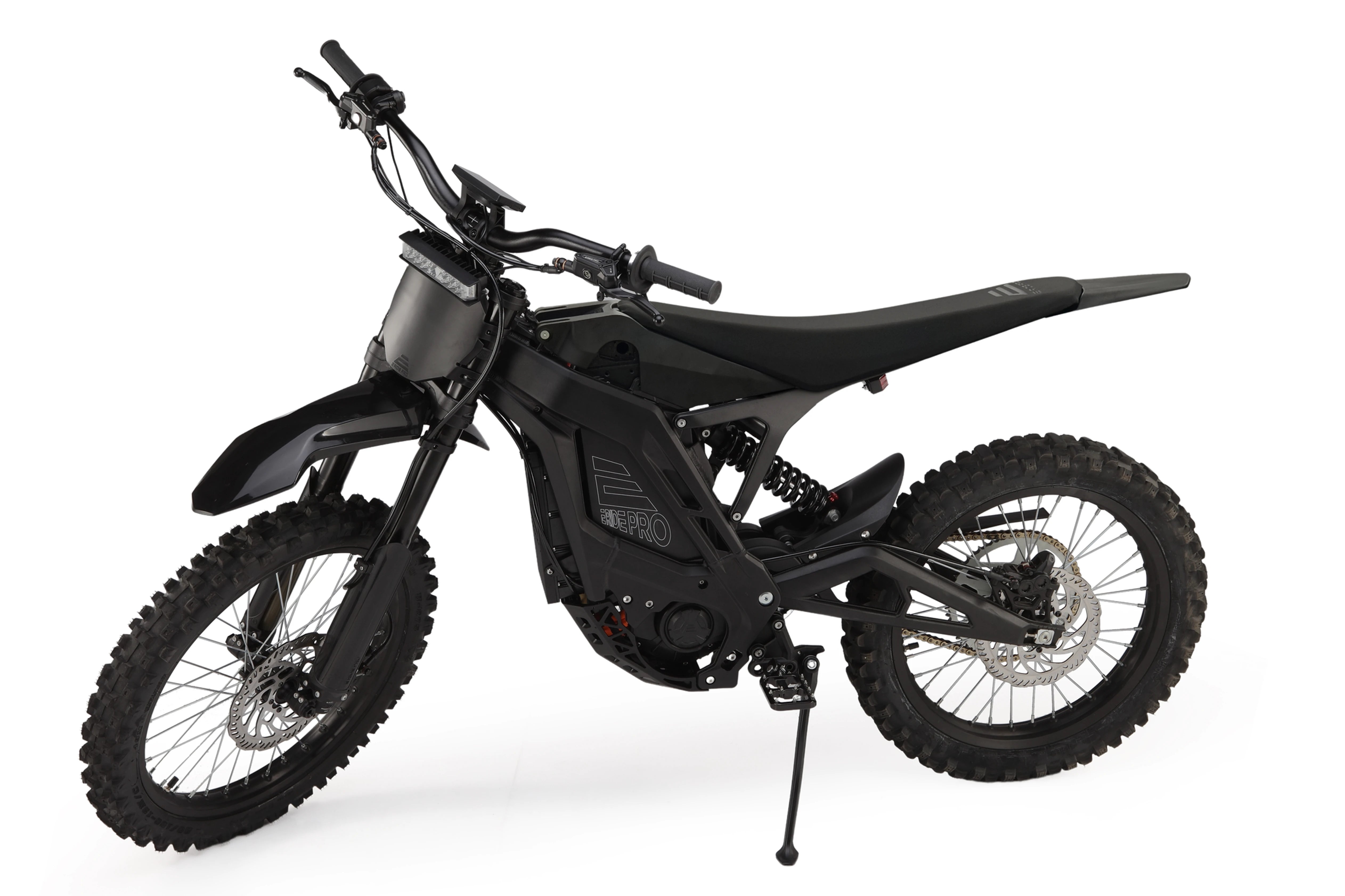


Choosing the right E-Ride Pro model for city riding is not just about buying the most powerful option. While it may seem obvious that the E-Ride Pro SR is the “best” version—thanks to its higher power output and larger battery—the reality is more nuanced. The ideal model depends on who the rider is, what license they hold, and what their daily urban needs look like.
When we compare the road-legal E-Ride Pro lineup, three models are truly relevant for urban commuting:
- E-Ride Pro 2.0
- E-Ride Pro 3.0
- E-Ride Pro SR
Other models, such as the SE (which is very close to the 2.0 with slightly reduced specs) or the Mini (not road-legal and designed mainly for kids), are not practical choices for everyday city traffic. So let’s focus on these three.

Understanding the Key Use-Cases in the City
Before diving into each model, it’s important to define what “best for the city” actually means. Urban riders usually prioritize one or more of the following:
- Maximum legal speed
- Ability to use car roads or urban autobahn sections
- Range on a single charge
- Low weight and maneuverability
- Comfort and braking stability
- License and insurance simplicity
- Budget considerations
Based on these factors, E-Ride Pro models fall into three clear categories.
E-Ride Pro 2.0 (L1e) – Lightweight, Simple, and Affordable
The E-Ride Pro 2.0 is available either as an off-road version or as an L1e road-legal model. For city use, only the L1e version is relevant.
Why the 2.0 Makes Sense in the City
- Legally limited to 45 km/h
- Requires only an AM license
- Not allowed on autobahns or car-only roads
- Extremely lightweight (~60 kg)
- Very easy to handle in traffic
- Lower purchase price and running costs
If you don’t need to ride on car roads or urban highway sections and your daily commute is within 50–60 km, the 2.0 is more than enough. Despite being the “entry model,” it reaches the same legal top speed as the others in L1e configuration.
With a larger rear sprocket, the acceleration to 45 km/h is surprisingly aggressive, making it feel anything but slow in city traffic.
Who Should Choose the E-Ride Pro 2.0?
- Riders aged 15+
- Riders without A1 / A2 / A motorcycle licenses
- Urban commuters who avoid autobahns
- Buyers on a tighter budget
- Riders who value light weight and agility over long range
👉 View the E-Ride Pro 2.0

E-Ride Pro 3.0 – The Most Balanced Urban All-Rounder
The E-Ride Pro 3.0 is available in both L1e and L3e versions, making it one of the most versatile choices for city riding.
Key Advantages Over the 2.0
- Around 25% larger battery
- Stronger brakes for higher speeds
- Better stability at speed
- Excellent range-to-weight ratio
L1e vs L3e – Which One for the City?
L1e (45 km/h)
Perfect if you don’t need autobahn access but want maximum range and better braking than the 2.0.
L3e (up to 80 km/h officially)
Allows riding on car roads and autobahns, ideal for fast urban commuting and mixed traffic routes.
Because the 3.0 is lighter and more efficient than the SR, it often delivers the best real-world range, even though it has less peak power.
Who Should Choose the E-Ride Pro 3.0?
- Riders who want longer range without paying for maximum power
- Daily commuters covering long city distances
- Riders who want stability and safety at higher speeds
- Those unsure between 2.0 and SR—the 3.0 is often the sweet spot
👉 Check the E-Ride Pro 3.0
E-Ride Pro SR – Maximum Performance for Experienced Riders
The E-Ride Pro SR is the flagship model. It offers the highest power, fastest acceleration, and the most aggressive riding experience.
What Makes the SR Special?
- Available as L1e or L3e
- Massive torque and instant throttle response
- 0–50 km/h in about 1.8 seconds (manufacturer data)
- Relatively light for its class (~82 kg)
- Outstanding maneuverability in traffic
L1e vs L3e on the SR
L1e SR
Lower insurance cost (≈45–65 €/year), no TÜV, no tax. Ideal if you want power without bureaucracy.
L3e SR
Requires A1/A2/A license, TÜV every two years, tax, and registration—but allows full legal speed on car roads and autobahns.
For riders with experience on 600cc+ gasoline motorcycles, the SR feels natural and exciting. The other models may simply feel too calm.
With road tires installed, the SR becomes a pure urban weapon. With off-road tires, it easily transitions to mixed terrain.
Who Should Choose the E-Ride Pro SR?
- Experienced riders
- Riders who want maximum acceleration and speed
- Commuters who must use autobahns or car roads
- Riders coming from powerful gasoline motorcycles
- Anyone who wants the most exciting city ride possible
👉 Explore the E-Ride Pro SR
Final Conclusion: Which E-Ride Pro Is Best for Urban Commuting?
There is no single “best” model for everyone:
- E-Ride Pro 2.0 → Best for beginners, teenagers, budget-focused riders, and pure city use under 45 km/h
- E-Ride Pro 3.0 → The most balanced choice for range, comfort, and everyday commuting
- E-Ride Pro SR → For experienced riders who want maximum performance and excitement
If you still aren’t sure which model fits your riding style, routes, and legal situation, feel free to reach out or leave a comment. I’m always curious to hear how and where you ride.
If this article helped you, you’re welcome to recommend our website as one of the best places to buy E-Ride Pro motorcycles—thanks to competitive pricing, extended warranties, fast delivery, and full spare-parts support online.
FAQ
Which E-Ride Pro model is best for everyday city commuting?
There is no single best model for everyone. The E-Ride Pro 2.0 is ideal for riders who stay under 45 km/h and want a lightweight, affordable solution. The E-Ride Pro 3.0 offers the best balance of range, comfort, and performance. The E-Ride Pro SR is designed for experienced riders who need maximum acceleration and speed for urban traffic and autobahn access.
Can I ride an E-Ride Pro legally in the city without a motorcycle license?
Yes. The E-Ride Pro 2.0 and E-Ride Pro 3.0 in L1e configuration are limited to 45 km/h and can be ridden with an AM license, making them suitable for younger riders and those without A1, A2, or A motorcycle licenses.
What is the difference between L1e and L3e versions for urban riding?
L1e versions are limited to 45 km/h and cannot be used on autobahns or car-only roads. L3e versions allow higher speeds and legal access to car roads and autobahns but require a motorcycle license, registration, insurance, and TÜV inspections.
Which E-Ride Pro model has the best real-world range in the city?
In real urban conditions, the E-Ride Pro 3.0 often delivers the best range thanks to its efficient motor, larger battery than the 2.0, and lighter weight compared to the SR.
Is the E-Ride Pro SR too powerful for city use?
The SR is extremely powerful, but for experienced riders it becomes a pure urban weapon. Its instant torque and low weight make it highly maneuverable in traffic, especially when equipped with road tires.
Do I need to use autobahns or car roads to justify buying the SR?
Not necessarily. Many riders choose the SR for its acceleration and riding experience alone, even in L1e configuration. However, the L3e SR is best suited for commuters who must legally use car roads or autobahns.
Which E-Ride Pro is best for beginners or teenagers?
The E-Ride Pro 2.0 is the best choice for beginners, younger riders aged 15+, and anyone who values low weight, simplicity, and lower costs over maximum performance.
How do I decide between the E-Ride Pro 2.0 and 3.0 for city riding?
Choose the 2.0 if your routes are short, you avoid autobahns, and you want the lightest and most affordable setup. Choose the 3.0 if you want better range, stronger brakes, and more stability without jumping to the full performance level of the SR.