



Author: Artur Ragulskyi | CEO & Founder
Reading time: ~11 minutes
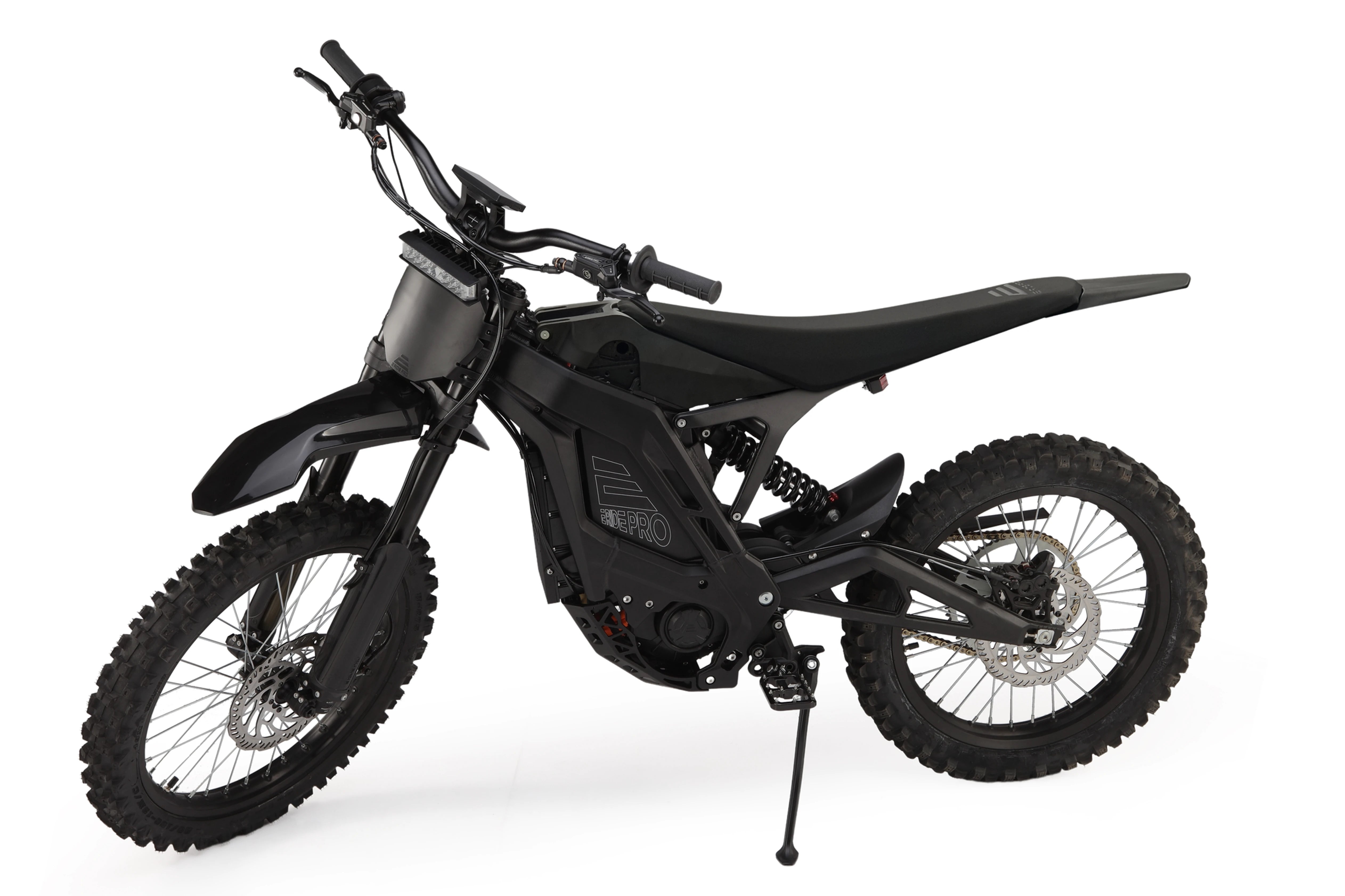
The bikes in the vectorebike.com lineup — from the Talaria X3 Pro to the E-Ride Pro SR 25kW — are high-performance electric motorcycles with 6 to 32 kW of peak power. They are not pedal-assist bicycles. The safety approach for these machines is fundamentally different from cycling, and treating them otherwise is the most common mistake first-time e-moto riders make. This guide is written for that context specifically.
Why Electric Dirt Bike Safety Matters Today
Electric dirt bikes have become genuinely fast, genuinely powerful machines. The gap between an e-moto and a traditional pedal-assist e-bike is enormous — in power output, acceleration behaviour, and the consequences of a mistake. When someone reads a headline about "e-bike injuries increasing dramatically", the vehicles responsible are almost never conventional pedal-assist bicycles. They are high-torque electric motorcycles — machines that produce instantaneous torque, reach 80–110 km/h, and provide no crash protection beyond whatever the rider brings to the ride.
A 2024 analysis published in the Deutsches Ärzteblatt found a high rate of head and facial injuries among severely injured e-scooter accident victims treated at a Munich trauma centre. While that study focuses on e-scooters rather than electric dirt bikes specifically, it reinforces a broader point relevant to exposed two-wheeled vehicles: head and facial injuries are common when riders lack appropriate protective equipment. The practical lesson is straightforward — on any high-speed two-wheeled vehicle, proper protective gear has a direct effect on injury severity.
The models sold by vectorebike.com — E-Ride Pro, Talaria, Altis Sigma, Vector — sit in the 6–32 kW range. These are not slow machines. The E-Ride Pro Mini at 6 kW is the gentlest in the lineup; the Talaria Komodo 32kW is a full L3e motorcycle. All of them require protection well beyond bicycle-grade gear and a rider mindset that matches the performance on offer. On the higher-power models in particular, full motorcycle-grade protective equipment is the correct standard.
Understanding Electric Dirt Bike Safety Risks
The Instant Torque Problem
Unlike petrol engines, which build power progressively through the rev range, electric motors deliver maximum torque from zero RPM. That means full acceleration is available with the first millimetre of throttle movement — before most new riders have developed the throttle sensitivity to modulate it smoothly.
The practical consequence: on an e-moto like the E-Ride Pro SS 3.0 15.8kW, an abrupt throttle application in a technical section can throw the rear wheel before the rider has registered the movement. This is not a defect — it is the physics of electric drive. Managing it is a learnable skill, but it requires deliberate practice and appropriate power mode selection during the learning phase.
Many models in the vectorebike.com lineup include selectable or programmable power modes for exactly this reason. Eco mode is not a "slow" mode — it is a mode that gives new riders time to develop throttle feel before accessing more aggressive power delivery.
The Silent Approach Risk
Electric motors are near-silent at low to medium speeds. This is one of their significant advantages for hunting and wildlife-sensitive riding. It is also a safety variable: other trail users, pedestrians, and wildlife do not hear you approaching. On mixed-use trails, parks, or any route that may include walkers, cyclists, or animals, silent operation requires higher rider vigilance, more conservative speeds near blind corners, and greater use of audible signals when approaching from behind.
Off-Road Terrain Hazards
The Vector and off-road configurations of the E-Ride Pro and Talaria ranges are designed for genuine off-road terrain — loose surfaces, embedded rocks, roots, drops, ruts, and sudden elevation changes. Each of these creates a specific injury risk:
- Loose surface: Reduced traction at front wheel; wash-out risk
- Embedded rocks and roots: Sudden handlebar deflection; wrist and shoulder injury risk
- Drops and jumps: Landing impact transmitted to spine, wrists, and ankles
- Ruts: Bike tracking into rut channels; foot-down injury risk at peg
None of these hazards are avoidable — they are the terrain. The correct response is matching speed to visibility and surface conditions, not avoiding the terrain.
The Weight Factor
The bikes in the vectorebike.com lineup range from ~48 kg (E-Ride Pro Mini) to 98 kg (Talaria Komodo). A tip-over at low speed on a 75 kg e-moto is a different physical event than the same tip-over on a 15 kg bicycle. Foot and ankle injuries from being caught under a falling bike are common for new riders. Proper motorcycle boots with ankle and shin protection reduce this risk substantially.
How Dangerous Are Electric Dirt Bikes Compared to Conventional Bicycles?
This comparison appears in safety discussions frequently — and it is the wrong comparison for the vectorebike.com product range.
The correct comparison is between an electric dirt bike and a petrol-powered motorcycle of equivalent power. When compared on that basis, the risk profile is very similar — and the safety equipment requirements are identical.
The confusion arises because some electric vehicles are marketed as "e-bikes" despite having motorcycle-equivalent power outputs. A conventional pedal-assist bicycle with 250W and a 25 km/h assist cut-off is genuinely a bicycle in terms of speed and energy. An e-moto with 6,000–32,000 W and a potential speed of 80–110 km/h is a motorcycle in terms of energy — regardless of what it is called commercially.
What the comparison data consistently shows:
- Without appropriate protective gear, high-power e-motos produce injury patterns similar to motorcycle accidents: head trauma, fractures, road rash, ankle and wrist injuries
- With appropriate protective gear — full-face helmet, motorcycle boots, armoured jacket, knee and back protection — the severity of these outcomes is substantially reduced
- The risk is not inherent to the vehicle; it is proportional to the gap between the vehicle's performance and the rider's gear and skill level
For the vectorebike.com lineup, the practical implication is clear: these bikes require motorcycle-grade protective equipment, not cycling equipment. A bicycle helmet is not appropriate for riding an Altis Sigma 22.5kW. Neither are trainers, jeans, or unarmoured gloves.
Essential Safety Tips for Electric Dirt Bike Riders
1. Full-Face Helmet — Non-Negotiable
The most important single piece of safety equipment on any motorised two-wheeler is a properly fitted full-face helmet. An open-face helmet, a cycling helmet, or a half-shell is not appropriate for a machine capable of 45–110 km/h.
For German riders — what the law requires:
Under §21a of the German Straßenverkehrsordnung (StVO), helmet use is legally mandatory for all motorised two-wheelers capable of exceeding 20 km/h. This covers every model in the vectorebike.com lineup without exception — both L1e and L3e certified models, when ridden on public roads. The law applies to both the rider and any passenger.
The StVO requires the helmet to be geeignet (suitable). In practice, this means a motorcycle helmet — not a bicycle helmet, not a skateboard helmet, not a "braincap". Helmets meeting ECE-R 22.05 or ECE-R 22.06 certification are the standard benchmark in Germany. Riding an L1e or L3e bike on public roads in Germany without a suitable helmet is a legal violation and can lead to penalties. For practical purposes, riders should treat full compliance here as non-negotiable.
For off-road use on private land, the legal mandate does not apply — but the physics of a tip-over at 60 km/h on a motocross track are identical to a tip-over on a public road. Full-face helmet off-road is best practice regardless of legal requirement.
Recommended specification: Full-face motorcycle helmet, ECE-R 22.06 certified, with MIPS or equivalent rotational impact protection for off-road use.
2. Motorcycle Boots — Protecting the Most Commonly Injured Area
Ankle and foot injuries are the most common impact injuries in low-speed tip-overs on off-road bikes. The mechanism is simple: the bike falls and the foot is caught under it, or the foot dabs the ground at an awkward angle at low speed. Regular footwear — trainers, hiking boots, work boots — flexes in ways that cause sprains, fractures, and crush injuries under these loads.
Proper motorcycle boots have: rigid construction that resists lateral flex at the ankle, shin protection, reinforced toe box, oil-resistant soles with peg grip, and secure buckle closures. They should cover the ankle fully and sit snugly enough not to move under load.
Investment of €150–€400 in quality motocross boots is among the highest-value safety purchases for an e-moto rider.
3. Armoured Riding Jacket with CE-Rated Spine Protection
Road rash from sliding on gravel, dirt, or rough trail surfaces is painful and slow to heal. More significantly, spine and back injuries from landings and falls represent the most serious risk category for off-road riders.
A CE Level 2 rated back protector — either integrated into an armoured jacket or worn as a standalone spine protector — should be considered mandatory equipment for anyone riding the Vector Vortex, Vector Tide, or any E-Ride Pro model at off-road speeds. CE Level 2 armour transmits less than 9 kN of force — a measurable and significant reduction in injury severity.
An armoured jacket should include CE-rated armour at minimum on shoulders, elbows, and back. Some riders use a separate standalone back protector for trail use.
4. Knee and Hip Protection
The knees are the most exposed joints during a fall on rough terrain. Knee braces or knee guards with CE certification protect against hyperextension, direct impacts from rocks, and peg strikes. For riders new to off-road riding — especially those on the Talaria X3 Pro or E-Ride Pro SE who are still developing technique — knee guards are among the highest-priority gear items.
Hip protection, in the form of armoured riding pants with hip inserts, is the next priority — particularly relevant for riders who may fall sideways in loose terrain.
5. Gloves — Both Safety and Control
Hands hit the ground first in most falls. Riding without gloves means both the hands and the wrists taking the full impact of a fall on bare skin. Beyond injury prevention, proper motorcycle gloves improve grip, throttle control, and reduce hand fatigue over long sessions.
At minimum: full-fingered gloves with knuckle protection and reinforced palms. For off-road use: motocross-specific gloves with additional padding and durable construction.
6. Goggles for Off-Road Riding
On the trail, debris, dust, branches, and "roost" — dirt and stones thrown up by the front tyre — are constant hazards to unprotected eyes. Even a full-face helmet does not adequately seal against fine dust without goggles. For any off-road use of the Vector series or off-road configurations of the E-Ride Pro models, goggles are standard equipment.
7. Neck Brace (Recommended for Higher-Power Use)
For riders on the E-Ride Pro SR, Talaria Komodo, or Altis Sigma — the most powerful models in the lineup — a neck brace used in combination with a full-face helmet and chest protector significantly reduces cervical spine injury risk in over-the-bar falls. At 25–32 kW, these machines are capable of speeds where the consequences of a high-side require the highest available protection level.
Gear Priority Summary
|
Priority |
Item |
Minimum Spec |
|
1 |
Full-face helmet |
ECE-R 22.06 certified |
|
2 |
Motorcycle boots |
Over-ankle, rigid construction, peg grip |
|
3 |
Back protector / armoured jacket |
CE Level 2 back protection |
|
4 |
Knee guards |
CE certified, motocross-spec |
|
5 |
Motorcycle gloves |
Full-finger, knuckle protection |
|
6 |
Goggles |
For all off-road riding |
|
7 |
Neck brace |
Recommended for 15kW+ / frequent jumping |
Power Mode Discipline: The Safety Feature Built Into Every Bike
Every model in the vectorebike.com lineup includes programmable power modes — typically Eco, Standard, and Boost on the Vector series, and equivalent settings on the E-Ride Pro and Talaria platforms. These are not marketing features. They are the primary safety mechanism for new riders on high-power machines.
The correct approach for new riders:
- First month: Eco mode only, regardless of how confident you feel after the first few sessions. The objective is throttle feel, braking points, and body positioning — not speed.
- Month two onwards: Standard mode for trail riding; Eco for technical sections where precision matters more than power.
- Full power: Only when you have consistent confidence in braking, throttle modulation, and line selection across a variety of terrain types.
This is not overly cautious. It is the approach consistently recommended by experienced motorcycle trainers. The beginner's guide on the vectorebike.com blog reinforces this: the most common mistake among new e-moto buyers is bypassing Eco mode entirely and encountering power that their technique is not yet equipped to handle.
E-Moto Safety Training and Skill Development
Germany: ADAC and Motorcycle Training Courses
For German riders, structured riding training is the most efficient path to both safety and skill. The ADAC Fahrsicherheitstraining (ADAC road safety training programme) includes two-wheeled vehicle safety courses available at training centres across Germany. While these are primarily designed for road motorcycles, the vehicle control, emergency braking, and hazard perception skills taught are directly transferable to L1e and L3e e-moto riding.
Riders planning to use their L1e models on public roads — particularly in urban environments in Munich, Hamburg, Berlin, or other major cities — benefit directly from training in wet-road braking, car door awareness, intersection behaviour, and defensive riding posture. For the L1e models in the vectorebike.com lineup (E-Ride Pro SS 2.0, E-Ride Pro SE, Talaria X3 Pro), road-environment training is a meaningful safety investment.
Off-Road Skills Training
For off-road use, track-based skills development at a dedicated motocross facility or off-road training centre is the controlled environment where riders can build technique without the risks of riding beyond their current ability in the field. Germany has a number of dedicated MX facilities and off-road parks where this kind of structured progression is possible.
The key skills that reduce off-road injury risk most significantly:
- Emergency braking: Practising maximum-effort braking from progressively higher speeds until it is instinctive
- Standing riding position: Proper standing technique on the pegs absorbs terrain impacts and significantly improves control on rough surfaces
- Throttle modulation through corners: Consistent smooth throttle application (no sudden on/off) is the single biggest factor in rear-wheel traction management
- Body weight management: Where your weight sits on the bike changes how it behaves at the front and rear — this is learnable technique, not natural ability
Vectorebike.com Test Drive Programme
Before purchasing, vectorebike.com offers test rides on all models. For first-time e-moto buyers, a test drive is the most efficient way to assess which power level genuinely suits current skill — and to experience the throttle character and weight of specific models before committing. Book a test drive →
Preventing Accidents and Improving Rider Awareness
Pre-Ride Checks
Before every ride, a brief pre-ride check takes under five minutes and catches the failures that cause accidents:
Brake check: Squeeze both levers before moving. Both should feel firm with consistent pressure. A spongy lever indicates air in the system or low fluid — do not ride until resolved. The vectorebike.com lineup uses hydraulic brakes throughout; they require occasional fluid checks and bleeding, not just pad replacement.
Tyre check: Confirm both tyres are correctly inflated and show no obvious damage. Cold tyre pressure should match the manufacturer specification in the user manual. Underinflated tyres significantly reduce grip and cornering stability. Over-inflated tyres reduce contact patch and comfort over rough terrain.
Battery level: Know your starting charge before any extended session. Running out of power in a remote trail location is a practical problem; riding with reduced power in the low battery range can affect handling predictability on some models.
Quick hardware scan: Check that the handlebar is straight and tight, both brake levers are correctly positioned, footpegs are secure, and the battery housing shows no damage from the previous ride.
Understanding Your Bike's Specific Behaviour
Each model in the vectorebike.com lineup has a distinct character:
- The E-Ride Pro Mini has a very forgiving, linear power delivery specifically tuned for learning — but its 680 mm seat height and compact dimensions require adjustment if you are coming from a larger platform.
- The Vector Vortex has a mid-drive motor that produces handling balance closer to a petrol bike than a hub-drive e-moto — an asset for experienced riders, but requiring calibration time for those new to this weight distribution.
- The Talaria Komodo 32kW and E-Ride Pro SR 25kW at full power are machines where technique must precede access to Boost mode. Riding these at full output without prior high-power experience is a serious safety risk.
Reading the user manual for your specific model — available at https://vectorebike.com/collections/bikes — provides the manufacturer's own guidance on power mode recommendations, weight limits, and operating conditions.
Riding Within Your Current Ability
The most common factor in off-road e-moto accidents is not equipment failure — it is riding beyond current technical ability. A rider who has spent two sessions on an e-moto, switched to Boost mode, and taken their first technical section at an optimistic speed is not the victim of the bike's power. They are the victim of the gap between their current technique and the demand they placed on it.
Practical application:
- Ride the terrain you can see, not the terrain you expect to be there
- If a section looks marginal, it almost certainly is — slow down before, not during
- After a tip-over or close call, stop for two minutes. Consider what happened and what you would have needed to do differently. Then ride on at a more conservative pace until confidence is rebuilt.
Group Riding Safety
Riding with other people is one of the most enjoyable aspects of e-moto ownership. It also introduces specific safety variables:
- Establish a gap convention: never ride directly behind another rider in dust, loose terrain, or downhill sections where sudden braking is possible
- Do not match the pace of a faster, more experienced rider until you have verified you can handle the same terrain at their speed independently
- Carry a basic first aid kit on extended group rides
Battery Fire Safety
Lithium-ion battery fires, while rare, represent the most serious safety risk associated with storing and charging electric vehicles. The basic precautions:
- Charge indoors at room temperature, never in extreme cold or heat
- Do not leave charging unattended overnight without fire containment measures
- Never charge a physically damaged battery — contact the https://vectorebike.com/pages/contact if the battery housing shows signs of swelling, impact damage, or connector problems
- Store and charge batteries away from flammable materials
The batteries in the vectorebike.com lineup use high-quality Samsung and Panasonic cells with robust BMS systems. Quality cell chemistry combined with correct charging habits substantially reduces any fire risk. For more detail, see our Complete Guide to Electric Dirt Bike Battery Care.
For model-specific guidance — including which power modes are available, how to set them, and what protective equipment the vectorebike.com team recommends for specific use cases — contact the team via the FAQ page or request a test drive. With over 11 years of experience selling, servicing, and tuning these platforms in Germany, the team can advise on both equipment choices and riding progression.
Also useful from the vectorebike.com blog:
- Beginner's Guide to Choosing Your First Electric Dirt Bike
- 5 Best Beginner Electric Dirt Bikes
- Electric Dirt Bike vs Electric Off-Road Bike: Key Differences
- Complete Guide to Electric Dirt Bike Battery Care
- Driving Licence Requirements for E-Bikes in Germany
FAQ
Are electric dirt bikes more dangerous than regular bicycles?
The comparison is not meaningful for the vectorebike.com product range. These are 6–32 kW electric motorcycles — the correct comparison is with petrol motorcycles of equivalent power, not with bicycles. When compared to petrol motorcycles, the risk profile is similar. When equipped with appropriate motorcycle-grade protective equipment (full-face helmet, motorcycle boots, back protector, knee guards), the severity of outcomes in most accidents is substantially reduced. The danger is not inherent to the electric powertrain — it is proportional to the mismatch between vehicle performance and rider gear or skill level.
What are the most important safety tips for electric dirt bike riders?
In order of impact: wear a properly certified full-face motorcycle helmet on every ride without exception; wear motorcycle boots with ankle and shin protection; use CE Level 2 back protection; and use power modes correctly — start in Eco mode and progress to higher power only when throttle control, braking, and body positioning are established. In Germany, helmet use is legally mandatory under §21a StVO for L1e and L3e models used on public roads, and the requirement applies to both rider and passenger.
Do safety training courses help prevent accidents on e-motos?
Yes, significantly. Formal motorcycle training — including the ADAC Fahrsicherheitstraining available across Germany — develops emergency braking, cornering technique, hazard perception, and vehicle control skills that directly reduce accident risk. For L1e riders using their bike on German public roads, road safety training is a practical investment, not a theoretical one. For off-road riding, structured skills development at a dedicated motocross facility builds the specific techniques — standing riding position, throttle modulation, body weight management — that make the most measurable difference on trail.
Why do some reports mention rising e-bike injuries and deaths?
Most of these reports conflate conventional pedal-assist e-bikes with high-power electric motorcycles. Research published in 2024 by US surgeons and reviewed in the American College of Surgeons Bulletin noted that many of the injuries attributed to ’e-bikes’ actually involve what the industry calls ’e-motos’ — high-power electric motorcycles often marketed under the e-bike label without appropriate safety context. The vehicles in the vectorebike.com lineup are genuine high-performance motorcycles and are marketed as such. The safety requirements for these machines are motorcycle-equivalent, not bicycle-equivalent.
How can beginners ride an electric dirt bike safely?
Start on a model matched to current skill level — the E-Ride Pro Mini or Talaria X3 Pro for most adult beginners, rather than jumping immediately to 18–25 kW platforms. Equip yourself completely before the first ride: full-face helmet, motorcycle boots, back protector, knee guards. Use Eco mode for the first weeks without exception. Practise emergency braking in a controlled area before taking the bike onto a trail. Ride within sight distance — never faster than the distance at which you can stop. Consider a test ride through vectorebike.com's test drive programme before purchasing, to confirm the model's power level and weight feel appropriate for your current ability.

