



Author: Artur Ragulskyi | CEO & Founder
Reading time: ~13 minutes
The most common question after buying an e-moto is: how long will it actually last? The honest answer is that the question itself is slightly wrong. A high-performance electric dirt bike does not have a single expiry date — it has a collection of components, each with its own lifespan, each of which is heavily influenced by how you maintain it. This guide gives you the real numbers, the honest expectations by component, and the specific maintenance habits that separate a bike that runs well for five years from one that starts declining after eighteen months.
Quick Answer
Electric dirt bike lifespan — the core numbers:
|
Component |
Well-maintained lifespan |
What shortens it most |
|
Frame |
10–20+ years |
Crash damage, corrosion from salt, overloading |
|
Motor |
8–15+ years / 20,000+ km |
Water ingress, overheating, power washing connectors |
|
Battery |
500–600 full cycles / ~50,000–60,000 km |
Charging cold, storing at 0% or 100%, heat exposure |
|
Controller |
5–10+ years |
Moisture, heat, connector corrosion |
|
Gearbox (Talaria) |
5,000+ km between replacements |
Skipping gearbox oil changes |
|
Chain |
1,500–3,000 km |
Riding dry, incorrect tension |
|
Brake pads |
1,500–3,000 km |
Contamination, aggressive wet riding |
|
Suspension |
1–2 years (fluid service interval) |
Neglecting fork/shock fluid, water contamination |
|
Tyres |
2,000–4,000 km |
Incorrect pressure, aggressive terrain |
Bottom line: The frame and motor of a quality e-moto can last decades. The battery is the primary consumable — but even battery degradation is heavily user-controlled. Riders who follow proper charging and storage habits routinely get 5+ years from their packs. The bikes sold at vectorebike.com use Samsung and Panasonic cells rated for 500–600 full cycles, which at typical riding frequency translates to 4–6 years before the battery reaches 80% of its original capacity.
How Long Does an Electric Dirt Bike Actually Last?
The lifespan of an electric dirt bike is not a fixed number — it is a product of three variables: the quality of the components, the intensity of use, and the quality of maintenance.
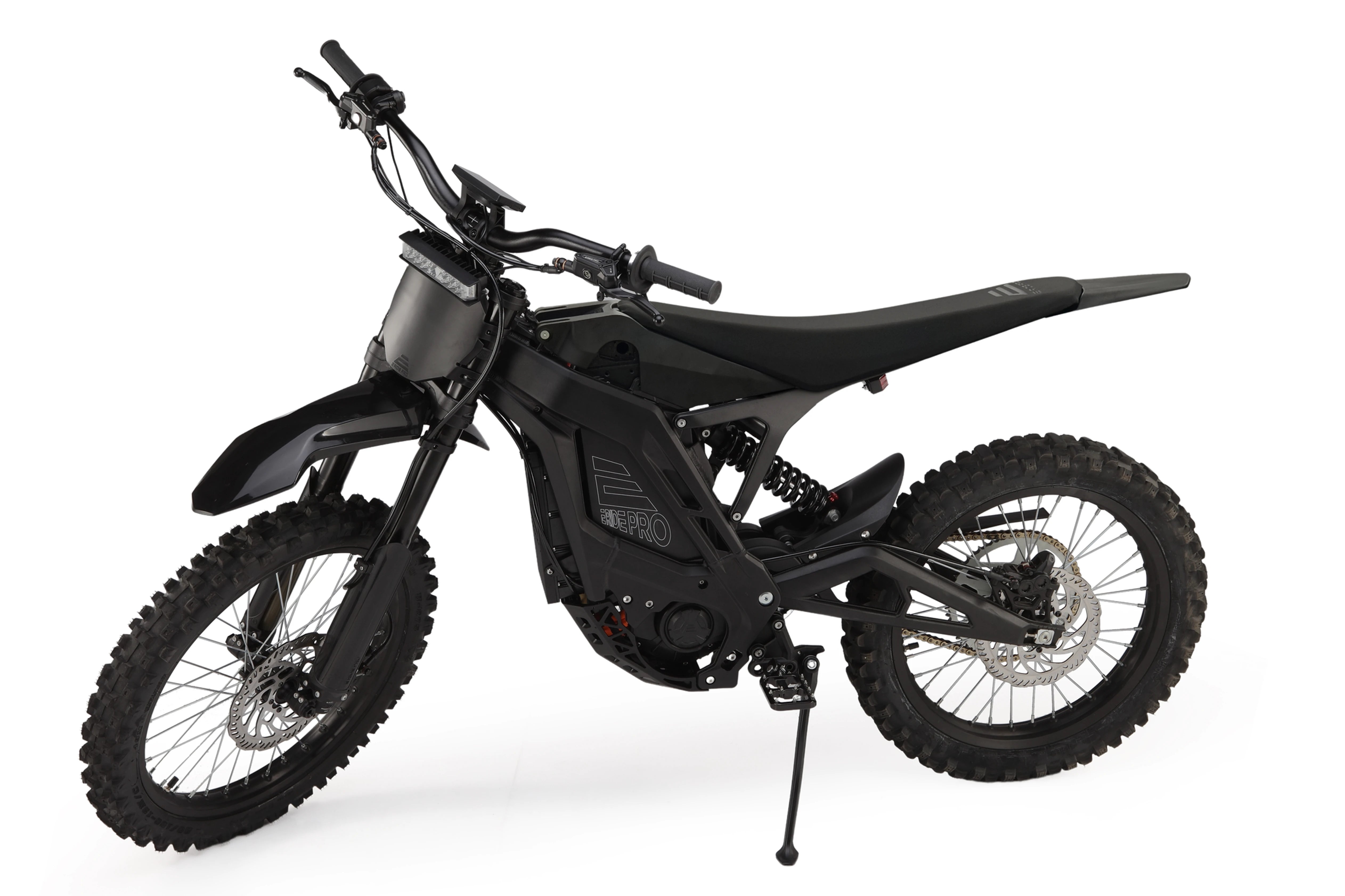
A high-performance e-moto from the vectorebike.com lineup — E-Ride Pro, Talaria, Altis Sigma, Vector — is not a consumer electronics device with a built-in obsolescence date. It is a mechanical and electrical machine built from replaceable components. The frame and motor can last as long as any petrol motorcycle frame — potentially decades. The battery is the key consumable, replaced once or twice over the life of the machine. Wear items like chains, brake pads, and tyres are replaced routinely, just like any motorcycle.
The useful question is not "how long does this bike last?" but "what are the expected costs and interventions over the years I own it?"
For a rider who commutes 3–4 times a week on an E-Ride Pro SS 3.0 L1e:
- Years 1–3: Brake pads, chain, tyres as normal wear items. No battery replacement.
- Years 3–5: Possibly one battery replacement if using 4–5 charges per week. Suspension fluid service.
- Years 5–8: Potentially second battery replacement. Controller may need inspection.
- Years 8+: Frame, motor, and controller still functional if maintained correctly.
The Vector Vortex adds a useful practical example: its oversized steel frame and mechanically simple mid-drive layout make it one of the lineup’s most durability-focused platforms for long-term ownership.
Understanding the Three Core Components: Battery, Motor, Frame
The Battery — the Primary Consumable
The battery is the most expensive replaceable component and the one most directly affected by user behaviour. Across the vectorebike.com lineup, the battery is the primary consumable component, but exact cell supplier and pack configuration can vary by model. In practical terms, modern lithium-ion packs of this type can often deliver several hundred charge cycles before noticeable capacity loss, with lifespan depending heavily on charging habits, storage conditions, riding intensity, and temperature.
What this means in practice: battery lifespan in years depends less on a fixed cycle number and more on how often the bike is charged, how deeply it is discharged, whether it is charged cold, and how it is stored between rides. A weekend rider may stay on the original battery far longer than a daily commuter, even on the same model.
The key insight: battery lifespan is strongly influenced by both charge frequency and charging habits. A rider who avoids unnecessary full charges, allows the battery to reach room temperature before charging, and stores it correctly will usually get meaningfully longer service life from the original pack. A rider who charges to 100% constantly, stores the battery poorly, or charges it while cold will usually see battery health decline much sooner.
The Motor — the Long-Term Reliable Part
The electric motor in a quality e-moto is one of the most reliable components on the entire machine. It has no spark plugs, no valves, no oil (in hub-drive configurations), and far fewer moving parts than a petrol engine. On well-maintained high-quality motors, 20,000+ km without significant degradation is a realistic expectation.
The main threats to motor lifespan:
- Water ingress through degraded seals or direct pressure washing
- Sustained overheating from continuous maximum-power operation without cooldown
- Connector corrosion from mud and moisture accumulation at the connector housing
For the E-Ride Pro series, the motor includes an advanced cooling system specifically designed to maintain stable performance under sustained aggressive riding. For the Vector Vortex, the mid-drive design means the motor is mounted centrally and experiences constant chain tension regardless of suspension compression — a design that reduces stress and extends service life beyond hub-drive alternatives.
The Frame — the Effectively Permanent Part
A quality aluminium or steel frame does not wear out in normal use. The frames on vectorebike.com models are built to motorcycle-grade specification:
- E-Ride Pro: Forged aluminium alloy frame
- Talaria: 6061 T4/T6 aluminium alloy
- Altis Sigma: Rigid, MX-spec chassis
- Vector Vortex/Typhoon: High-strength steel, intentionally oversized
- Vector Tide: Aviation-grade aluminium
These frames can outlast the electrical components by decades if not subjected to crash damage or salt corrosion. A frame that is cleaned after every wet ride and inspected periodically for stress cracks will realistically last 15–20+ years. The replaceable nature of batteries and controllers means the frame is not a limiting factor in the machine's useful life.
What the Maintenance Schedule Actually Looks Like
The Critical Distinction: Electric vs Petrol Maintenance
Electric dirt bikes require substantially less maintenance than petrol alternatives — but "less" does not mean "none". The comparison is often made simplistically:
|
Petrol dirt bike (comparable power) |
Electric dirt bike |
|
Engine oil change every 10–15 hours |
No engine oil — not applicable |
|
Air filter cleaning every 2–5 rides |
No air filter — not applicable |
|
Spark plug replacement periodically |
No spark plug — not applicable |
|
Valve adjustment every 20–40 hours |
Not applicable |
|
Carburettor/injector service |
Not applicable |
|
Gearbox oil (Talaria models) |
Gearbox oil change every 1,000 km |
|
Chain lubrication after every wet ride |
Same requirement |
|
Brake pad inspection |
Same requirement |
|
Tyre inspection |
Same requirement |
|
Suspension fluid service |
Same requirement |
The electric motor eliminates an entire category of engine maintenance. What remains is fundamentally the same as any off-road motorcycle: drivetrain, braking, tyres, and suspension.
Post-Ride Maintenance (After Every Ride)
Rinse and inspect. Remove mud and debris with a low-pressure hose or damp cloth. Do not use a pressure washer — high-pressure water forces moisture into bearings, connectors, and motor seals. The batteries on vectorebike.com models are rated IP67, but sustained connector exposure to water and mud causes corrosion over months.
Check and dry the battery connector. After any wet ride, confirm the battery connector housing is clean and dry before re-inserting or charging. A 30-second check prevents the slow corrosion that causes connector failures months later.
Chain inspection. After every ride, check chain tension and lubrication. A dry or gritty chain causes accelerated sprocket wear and draws more power from the motor, reducing range. Apply chain lubricant to a clean chain — wipe off excess to avoid attracting more grit.
Bolts check on aggressive terrain. Off-road vibration loosens fasteners. After any technical trail session or track day, run a quick check on high-risk fasteners: axle bolts, suspension linkage bolts, handlebar clamp bolts, battery housing bolts. A torque wrench is the right tool for this — not a feeling.
Weekly Maintenance (1–2 Rides Per Week)
Tyre pressure. Check before every ride if possible, weekly at minimum. Correct tyre pressure reduces rolling resistance (extending range), improves handling, and reduces the risk of tyre damage from impacts. For hard off-road use, slightly lower pressure improves traction — but be aware of the increased rolling resistance trade-off.
Brake lever feel. Squeeze both levers before riding. A spongy lever indicates air in the hydraulic system or low fluid — do not ride until resolved. The hydraulic disc brakes on the vectorebike.com lineup (Tektro, Hayes Dominion, FastAce-compatible systems) require occasional bleeding and fluid replacement, not just pad inspection.
Battery level check. If the bike has not been ridden in 5+ days, check the charge level. A battery sitting below 30% for extended periods is in the range where continued self-discharge becomes a risk. Top up to 50–60% for storage.
Monthly Maintenance
Chain lubrication (more frequent in wet conditions). Even with post-ride lubrication, a monthly thorough clean-and-lubricate cycle is good practice. Use a quality chain degreaser, clean the chain and sprockets thoroughly, allow to dry, then apply chain lubricant. This is one of the highest-impact maintenance habits for drivetrain longevity.
Connector inspection. Check all main electrical connectors (battery, motor, controller) for oxidation, moisture ingress, or looseness. A small amount of dielectric grease on connector housings reduces the rate of corrosion in wet climates — relevant for German riders in the rain-heavy months of autumn and winter.
Suspension inspection. Check fork seals and rear shock for oil leaking. A small amount of film around the seal is normal; visible pooling or dripping indicates a seal replacement is needed. Check rear linkage bearings for play.
Battery calibration cycle. Every 30–50 charges, run a calibration cycle: discharge to 10–15% through normal riding, then charge fully to 100%. This allows the BMS to recalibrate its capacity reporting and prevents the charge indicator from becoming inaccurate over time.
By-Mileage Service Intervals
Talaria models (MX5 Pro, X3 Pro, Sting R MX4, Komodo):
The Talaria gearbox uses oil — unlike belt-drive or direct hub-drive systems, the Talaria's proprietary gearbox and primary chain drive requires regular oil changes. This is the primary model-specific maintenance interval for Talaria owners.
- First oil change: 300 km (break-in period). During break-in, microscopic metal particles from new gear surfaces accumulate in the oil. This change is critical for long-term gearbox health — do not skip it.
- Subsequent oil changes: every 1,000 km for standard riding; every 3–4 months or after every major ride session for aggressive off-road or track use.
- Oil to use: Manufacturer-specified gear oil. Using the wrong viscosity causes inadequate lubrication and accelerated wear.
E-Ride Pro models (SR, SS 3.0, SS 2.0, SE, Mini):
Hub-drive motor systems do not require oil changes. The primary model-specific interval is:
- Controller settings check every 3–6 months for actively used bikes: confirm current limits, temperature thresholds, and power mode configurations via the mobile app.
- Suspension fluid service: FastAce forks typically require fluid replacement every 40–50 hours of off-road use or annually for regular riders. Check fork seals for leaking before each major session.
Vector models (Vortex, Typhoon, Tide):
The Vector series is designed for minimal maintenance — particularly the Vortex, where the mid-drive motor on the swingarm means chain tension remains constant regardless of suspension travel.
- Chain and sprocket inspection: every 500 km. The 428-spec moto chain on the Vortex should be replaced approximately every 1,500–2,000 km of hard use.
- Kelly controller inspection: annually for actively used bikes. Check for heat damage to connectors, confirm firmware is current.
- DNM suspension fluid service: annually or every 40–50 hours of off-road use.
Annual Service and Seasonal Maintenance
Pre-season inspection (March/April for German riders):
Before the riding season begins in Germany, after winter storage:
- Charge the battery to 80–90% and check for any capacity loss vs. last season
- Inspect all bearings for play: headset, wheel bearings, swingarm bearings, linkage bearings
- Bleed brakes if fluid has not been changed in 12+ months
- Check tyre sidewalls for cracking from winter storage
- Inspect all cables and connectors for moisture damage
- Confirm motor mounts and frame bolts are at correct torque
Post-season preparation (October/November in Germany):
Before winter storage (or if the bike will not be ridden for more than 4–6 weeks):
- Charge battery to 50–60%
- Remove battery from bike and store indoors (unheated garages in Bavaria reach −2°C to −5°C in January — see the battery care guide)
- Clean the entire bike, pay attention to connector housings and sealed bearings
- Apply anti-corrosion treatment to steel components and bolt heads
- Check and set tyre pressure correctly for storage
Maintenance Schedules by Model Family
For Talaria Riders (X3 Pro, MX5 Pro, Sting R MX4, Komodo)
|
Interval |
Task |
|
After every ride |
Clean, chain lubrication, connector check |
|
Every 300 km (first) |
Gearbox oil change — critical break-in flush |
|
Every 1,000 km |
Gearbox oil change |
|
Every 1,500 km |
Chain inspection and possible replacement |
|
Every 2,000 km |
Sprocket inspection |
|
Every 3,000 km |
Brake fluid bleed |
|
Every 3,000–5,000 km |
Brake pad replacement (depending on use) |
|
Annually |
Suspension fluid service, bearing inspection, full electrical check |
For E-Ride Pro Riders (SR, SS 3.0, SS 2.0, SE, Mini)
|
Interval |
Task |
|
After every ride |
Clean, connector check, chain lubrication |
|
Monthly |
Chain thorough clean and lube, tyre pressure, brake feel check |
|
Every 40–50 off-road hours |
Fork fluid service (FastAce) |
|
Every 2,000 km |
Chain replacement check |
|
Every 3,000 km |
Brake fluid bleed |
|
Annually |
Bearing inspection, full suspension service, and a general electrical system check |
For Vector Riders (Vortex, Typhoon, Tide)
|
Interval |
Task |
|
After every ride |
Clean, chain inspection, connector check |
|
Every 500 km |
Chain tension and sprocket wear check |
|
Every 1,500–2,000 km |
Chain replacement |
|
Every 40–50 off-road hours |
DNM fork and shock fluid service |
|
Annually |
Bearing inspection, controller and electrical system check, and suspension service as needed |
The Most Common Mistakes That Shorten Lifespan
1. Pressure washing the bike. The single most common cause of premature electrical failures in e-motos. High-pressure water forces through motor seals, connector housings, and bearing seals. Use a low-pressure hose, a soft brush, and a cloth.
2. Charging immediately after a cold ride in winter. In Germany's winter months, a battery ridden at temperatures below 5°C needs 60–90 minutes at room temperature before charging. Charging a cold battery risks irreversible lithium plating. See the battery care guide for the full explanation.
3. Skipping the Talaria gearbox break-in oil change. The first oil change at 300 km removes metal particles from the gear break-in period. Riders who skip this often see gearbox noise and wear within the first 2,000 km. It takes 15 minutes and costs under €10 in oil — there is no good reason to skip it.
4. Leaving the battery at 0% or 100% for extended periods. Both extremes stress lithium-ion cells. A battery stored at 0% for a month may never fully recover. A battery charged to 100% and left on the charger overnight accelerates calendar ageing.
5. Riding through deep water without checking seals. Water resistance helps, but it does not make an electric dirt bike immune to repeated water exposure, submerged connectors, or moisture trapped after a ride. After water crossings, inspect the connector housing and check for moisture in electrical components.
6. Running chain tension too tight. On the Talaria models, correct chain slack directly affects the gearbox output shaft bearing. Too tight causes premature bearing wear. The suspension travel changes the effective chain tension through the travel range — set chain tension with the suspension at mid-stroke, not at full extension.
7. Ignoring early brake sponginess. A spongy brake lever is an early warning of air in the hydraulic system. Continued riding with degraded brake feel is a safety issue — and the longer it is ignored, the more moisture accumulates in the fluid, reducing boiling point and accelerating system degradation.
How a Proper Maintenance Regime Affects Resale Value in Germany
Resale value of used e-motos in Germany is increasingly influenced by documented maintenance history. A used E-Ride Pro SR or Talaria Komodo with documented service records — gearbox oil changes, suspension fluid service, battery care logs — commands meaningfully higher resale prices than an identical bike without documentation.
For L1e models sold in Germany under Versicherungskennzeichen, there is no mandatory inspection (no TÜV requirement for L1e). This means the only record of maintenance is what the owner creates voluntarily. Buyers are increasingly aware of this gap and specifically ask for service history.
Practical recommendation: maintain a simple log (a notebook or spreadsheet) recording:
- Date of each service
- Mileage at service
- What was done and what was replaced
- Battery health information, if your model and app setup provide it
This takes five minutes per service and adds tangible value at resale.
Where to Get Service for Your Bike in Germany
Vectorebike.com operates as both dealer and authorised service centre for E-Ride Pro, Talaria, and Altis — based in Munich. This means:
- Service and repair by the same team that sells the bikes
- Access to genuine manufacturer parts (not generic alternatives)
- Software updates and controller tuning
- Warranty claims handled directly without passing through third-party intermediaries
The 27-month warranty (24+3) that comes with every bike purchase covers mechanical and electrical defects. For post-warranty service, vectorebike.com continues to stock spare parts and offer technical support — a meaningful difference from unverified third-party sellers who may have no parts infrastructure after the sale.
For Vector series owners, the components section of the site carries genuine spare parts, replacement batteries, controllers, suspension components, and drivetrain parts.
FAQ
How long does an electric dirt bike last?
With proper maintenance, a quality e-moto from the vectorebike.com lineup will last 8–12+ years of regular use. The frame and motor are the long-term durable elements — they can last 15–20+ years. The battery is the primary consumable and will usually need replacement before the frame or motor. Exact lifespan depends on the model, charge frequency, temperature, storage habits, and riding intensity. Riders who charge less often and store the battery correctly will usually get meaningfully longer battery life than riders who charge frequently and handle the pack poorly.
What is the most important maintenance task for an electric dirt bike?
Battery care is the highest-impact single habit. Specifically: never charge a cold battery (let it warm to room temperature first after a winter ride in Germany), avoid storing at 0% or 100%, and charge to 50–60% for storage rather than full. This alone extends battery lifespan by 30–50% compared to careless charging habits. The second most important task for Talaria owners is the gearbox oil change at 300 km break-in — this specific interval has more impact on long-term gearbox health than any subsequent service.
How often should I service my electric dirt bike?
After every ride: clean the bike, check the chain, inspect the battery connector. Monthly: thorough chain lubrication, tyre pressure, brake feel check. Model-specific intervals: Talaria gearbox oil every 1,000 km; suspension fluid service annually or every 40–50 off-road hours for E-Ride Pro and Vector models. Annual: full bearing inspection, brake bleed, electrical connector check. See the model-specific tables above for the complete schedule.
Can I do the maintenance myself, or do I need a professional?
Most routine maintenance — cleaning, chain lubrication, tyre pressure, visual inspections — is straightforward DIY. Gearbox oil changes on Talaria models require only basic mechanical competence. Suspension fluid service (fork and shock oil) is more involved but manageable with the right tools and the user manuals available on the vectorebike.com downloads page. Brake bleeding requires a bleed kit and some practice. Controller firmware updates require the manufacturer app. For anything involving electrical fault diagnosis, BMS issues, or major component replacement, the vectorebike.com service team in Munich handles this directly.
What reduces electric dirt bike lifespan most?
In order: (1) charging a cold battery — causes irreversible lithium plating; (2) pressure washing — forces water into electrical components; (3) storing at 0% charge — may cause permanent cell damage; (4) skipping the Talaria gearbox break-in oil change; (5) ignoring early signs of brake or suspension degradation. All five are entirely avoidable with basic attention.

